With a brief period of cold weather some children began to take notice of the coloured leaves that began to change and fall. During our outdoor time some children have either stomped on them or picked them up to observe more closely. Taking notice of this the educators wondered how much our school-age 2 (SA2) group already knows about fall and what they want to know more about.
To begin our fall exploration, educator Julia read “Autumn Leaves Fall” during circle time. The story highlights seasonal changes like falling leaves, cooler weather, and nature’s preparation for winter. It sparked curiosity and helped children connect what they see outside to what they heard in the story. We then began to record their knowledge and wonders. Some questions the children had:
- Why does it get cold outside?
- What makes leaves fall?
- What animals prepare for sleep during the fall?
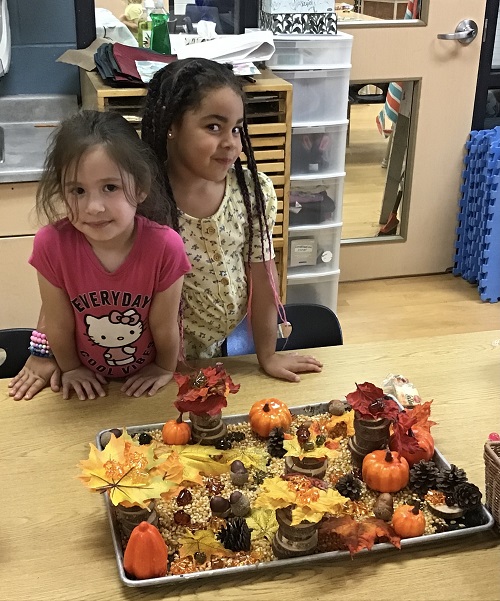
In September, the children explored an open-ended provocation with loose parts—popcorn seeds, fake leaves, pine-cones, and acorns—arranged in bowls around a large tray. The educator asked them the question, “What does a fall ground look like to you?” To spark their imagination. The SA2 children used the materials to create their own versions of a fall landscape, learning about seasonal elements, using their creativity, and building fine motor and design skills.
One day this month the SA2 group ventured into the forest for an exciting nature walk inspired by our ongoing learning about fall. Our exploration was guided by a series of thoughtful questions the children have been asking:
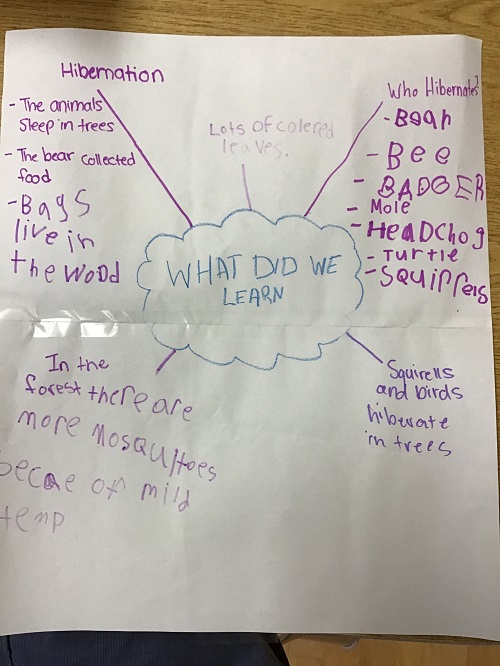
- How do animals hibernate?
- What animals hibernate?
- What food do they collect?
- What happens to the leaves in the fall?
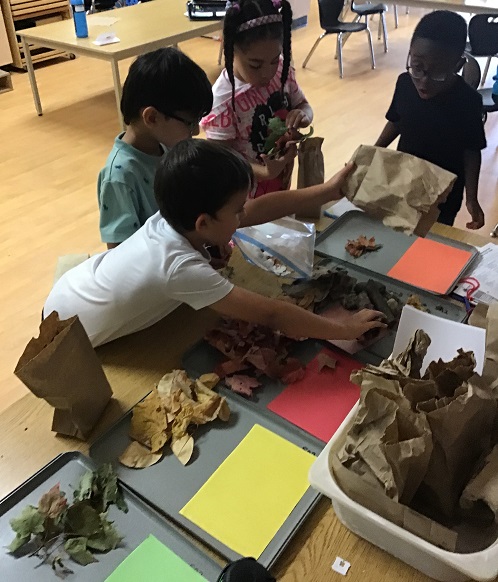
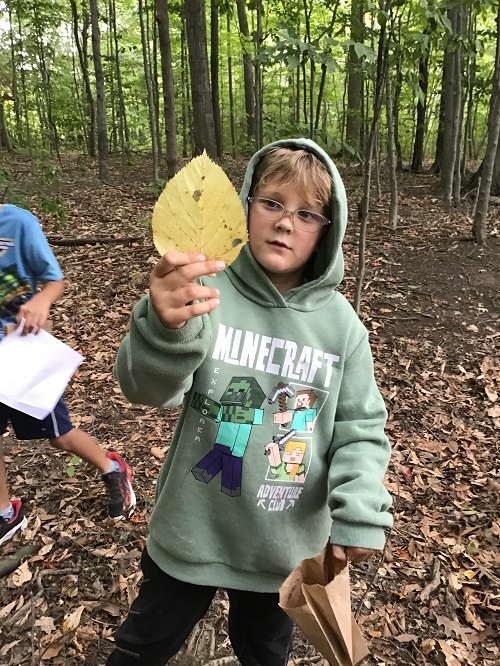
As soon as we entered the forest, the children were amazed by the sheer number of leaves already scattered across the ground. “Look how many leaves have fallen!” one child exclaimed. The educator explained that most of the leaves on the ground are from last years fall, and then these leaves are beginning to decay (crumble, fall apart, turn into soil) This prompted a discussion about how and why trees shed their leaves in autumn. The children eagerly began collecting a variety of colourful leaves, carefully placing them into their brown paper bags to bring back to our centre for future projects and investigations.
While exploring deeper into the forest, we noticed an abundance of activity around the trees — both alive and dead. Children were quick to spot insects hiding in the crevices of tree bark and under rocks. “There’s a bug in there!” one called out, pointing to a bee hiding in a fallen tree trunk. Through group discussion and educator guidance, we concluded that some bugs must use trees as a safe place to hibernate during the winter months. This discovery helped the children make a direct connection between insects and winter survival strategies.
As we continued along the trail, the ground was littered with acorns. “There are so many acorns!” one child said with wide eyes as he put his find in his bag. Other forest items that the children collected were: rocks, moss, bark as well as a verity of coloured leaves.Some new words we learned the definition to is: hibernation & decay. This is just the first of many fall-inspired activities, and we’re excited to keep exploring the wonders of the season together!