This month in School-Age 2 the educators will be uncovering ways to develop social skills. More specifically the educators have been supporting skills Under the CASEL (Collaborative, Academic, social, and emotional Learning) framework. According to this frame work, elementary students begin developing the following social skills; Self-Awareness (recognizing emotions), Social Awareness (empathy), Relationship Skills (cooperation, helping, turn-taking) and Self-Management (waiting, managing frustration).
To start, the educators introduced 2 co-operative activities, a tower build competition and the floor is Lava!
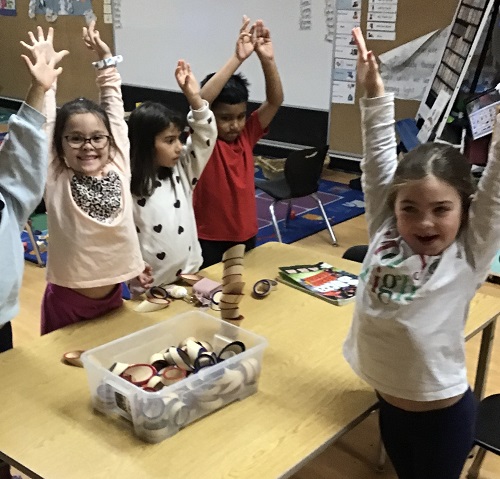
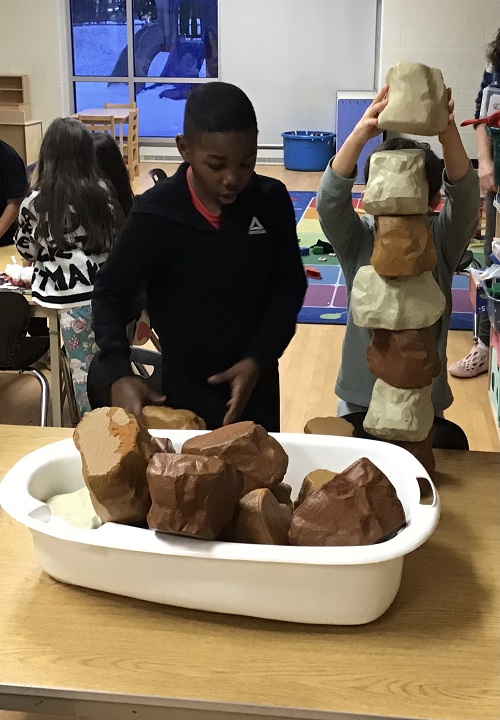
In the tower Build Competition, participating children were challenged at three different building stations: foam rocks, wooden shapes, and fuzzy wooden rings. The group was divided into three teams, each working together to design and build the tallest and most stable tower possible. Throughout the activity, the children demonstrated strong teamwork by sharing materials, taking turns, and collaborating on ideas. Many children communicated their plans clearly, offering suggestions such as where to place heavier pieces, how to balance the structures, and when to rebuild after a tower fell. There were lots of problem-solving as teams adjusted their designs and supported one another through trial and error.
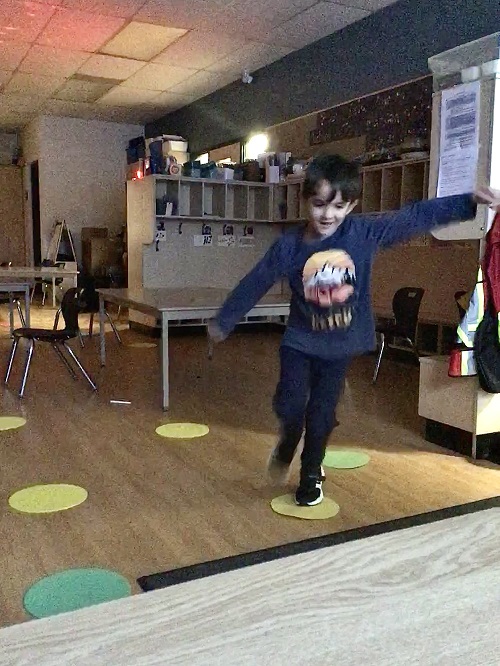
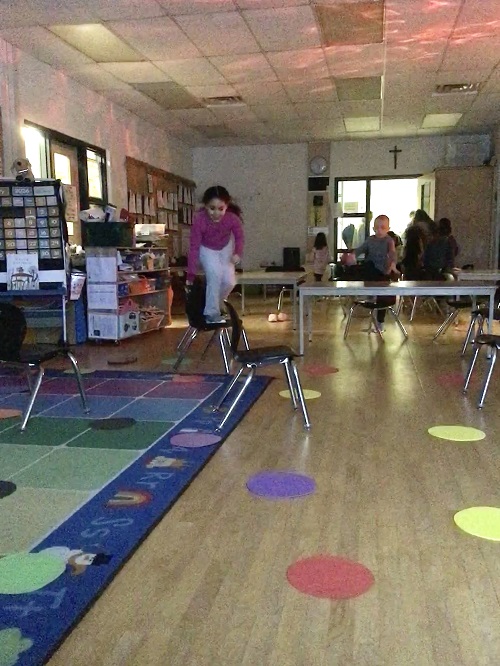
In the floor is lava competition, the children participated in a collaborative obstacle-course made up of chairs, tables, and coloured circles on the floor, the challenge was clear: work together to travel across the room without touching the “lava,” rescue a heavy weighted animal at the end of the course, and safely return it to the starting line.
As the game began, the children immediately started sharing ideas. Some suggested where to step, while others reminded their peers to slow down and watch their balance. The weighted animal added an extra challenge, “who is going to carry the heavy frog, it has to be someone strong because if it is some who is not strong then they are going to drop it and then we will have to start all over again,” explained one of children. Feeling the pressure of time and waiting to finish first, in seconds the group of children mutually agreed on one person to carry the frog. Throughout the activity, children naturally took on different roles—leaders who offered directions, helpers who supported classmates who needed balance, and encouragers who cheered on the group.
There were moments of problem-solving when the group realized they needed to adjust their strategy. Children discussed how to move the animal without anyone falling into the “lava,” moving chairs to make their path easier as well as deciding which path to take. They demonstrated patience, negotiation, and compromise. When mistakes happened, peers offered reassurance and tried again rather than giving up.
By the end of the course, the group successfully returned the weighted animal to the starting line. The children celebrated together, showing pride in their shared accomplishment.
What stood out most was the children’s excellent sportsmanship. They celebrated their own successes with excitement and cheered for other groups as well, showing respect and encouragement regardless of the outcome. When challenges arose, the children remained positive and worked together to try again. This activity supported social skills, communication, cooperation, and perseverance, while also fostering a sense of community and friendly competition within the group.