The classroom buzzed with excitement as we began our next science experiment—a volcano eruption. As Simone gathered the supplies, Keyen and Robbie watched closely, their curiosity growing with each item I placed on the table. This wasn’t their first time exploring volcanoes, but their enthusiasm made it feel brand new.
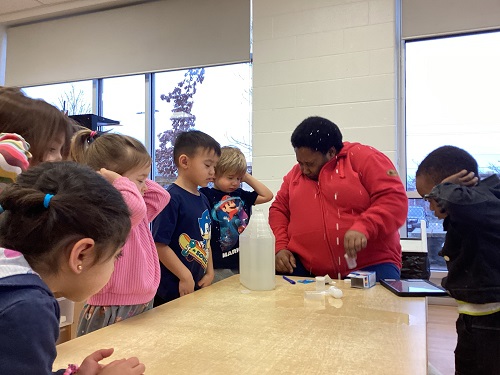
To spark their thinking, I showed a short video of a volcano erupting. The children watched in awe before we began identifying the materials we would need.
“Vinegar,” Robbie said confidently.
Keyen pointed to a small blue packet, wondering what it could be. I explained that it was Alka-Seltzer—something that could help create a reaction. Along with film canisters, these simple materials would help us recreate something powerful.
We also looked at a picture showing how magma moves upward with gas, building pressure until it finally erupts. The children listened carefully, beginning to connect the science to what they were about to see.
Then came the hands-on part. As we combined the materials, we waited in anticipation. Even though we knew what was coming, each eruption still surprised us. Quinn suggested that everyone cover their ears because of the loud popping sound, adding to the excitement. We also noticed that sometimes nothing happened at all, which led us to discuss how eruptions need enough pressure to occur.
During the activity, we introduced a follow-up experience focused on “hot and cold.” This was inspired by the children’s strong interest in the idea that a volcano could hurt them if touched. In this activity, children were invited to draw different items and decide whether they belonged in the “hot” or “cold” category, then glue them accordingly. For example, we discussed a fireplace—“Do you touch it without Mommy or Daddy?” The children responded, “No, because it’s hot.” We also talked about electrical outlets and why they are unsafe. In contrast, items like a brush or ice were identified as “cold” and safe to touch.
This activity helped the children make meaningful connections to their everyday lives, supporting their understanding that some things at home should not be touched because they can cause harm.
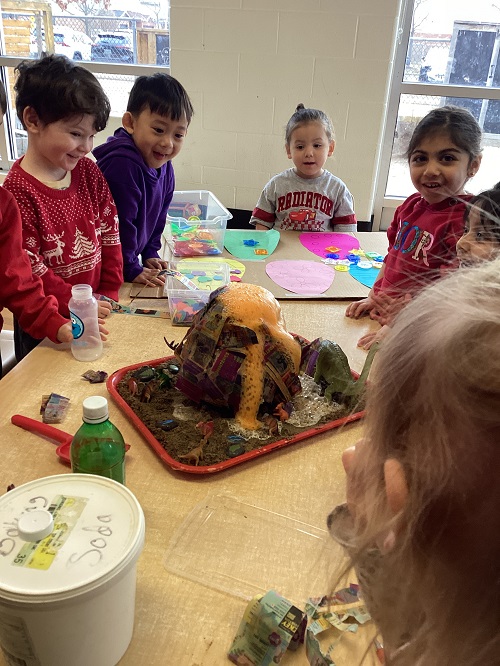
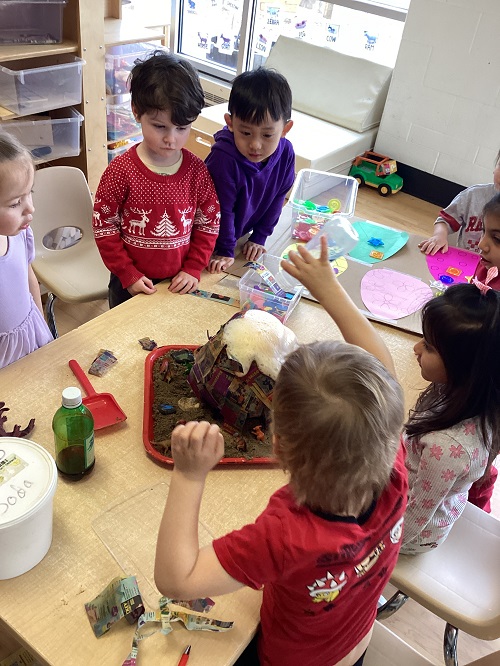
Later, we revisited our learning in a new way by creating our very own volcano habitat. This time, dinosaurs became part of the scene, making the experience even more imaginative. Quinn eagerly helped build the habitat, with Robbie quickly joining in. Both of them kept asking the same question: “When will it erupt?”
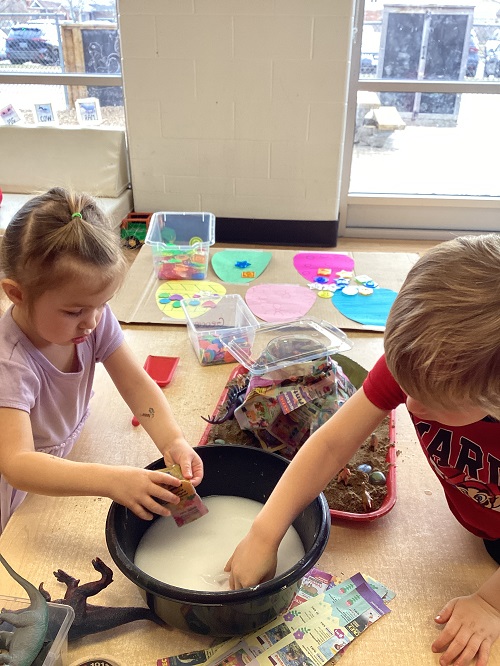
Quinn thoughtfully explained that we needed gas, and together we completed the setup. I added orange food colouring to represent hot lava, and we discussed how lava can appear orange when it is very hot and turn red as it cools. After adding baking soda, the children carefully poured in the vinegar.
What followed was a series of exciting eruptions. The children watched, laughed, and repeated the experiment again and again with their friends. When I asked what was happening, they observed that there was “a lot of gas,” showing their growing understanding of how the reaction worked.
As the morning continued, it was clear that their interest in volcanoes remained strong. We will continue to build on this curiosity by offering more opportunities for exploration, discovery, and learning.