To kick off the month of October, the School-age 2 group began learning about Thanksgiving by taking a step back in time to explore its history. Through stories, group discussions, hands-on activities, and creative projects, the children engaged with this new learning opportunity. Their curiosity and creativity shone through as they reflected on the importance of gratitude and community through what it meant back then, and what it means now. We began our journey by reading The Story of Thanksgiving by Nancy J. Skarmeas, where the children learned about the Pilgrims and the Wampanoag people. To help them stay focused and connected, we used word prompts and action movements throughout the story; When they heard the word “Pilgrim” the kids “waved” and said “Hello!”, when they heard the word "Planted" they “rose up and grew like a flower” and when they heard “food” they pretended to eat a feast as quickly as they could with their hands. In doing these actions the children showed engagement in the book they started to share thoughtful observations like, “They had to help each other so they could live,” showing they understood the concept of cooperation and community. The next day, we explored what it meant to harvest foods, traditions, and the importance of sharing. The children learned that long ago, people didn’t have easy access to food like we do now, they had to grow it themselves, and if the harvest was poor, the Pilgrims would go hungry through the winter. We discovered that without the Indigenous peoples teaching them how to plant new crops and hunt, they would have had very little to eat. The children shared the foods they enjoy at their own Thanksgiving tables and engaged in discussion on how fortunate they are to have grocery stores today. They made thoughtful connections between what the Pilgrims and Indigenous peoples might have eaten during a good harvest and what their own families eat during Thanksgiving celebrations.
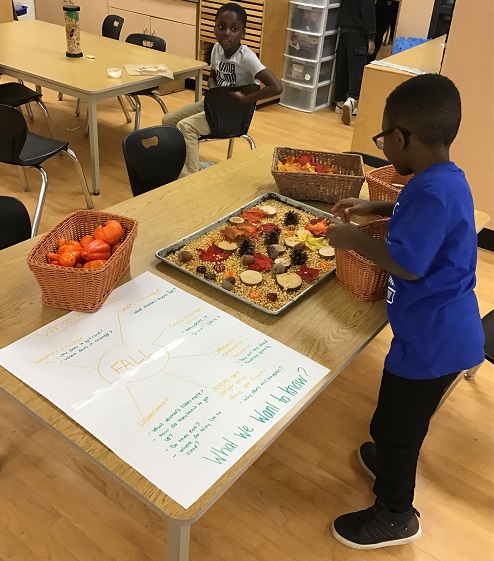
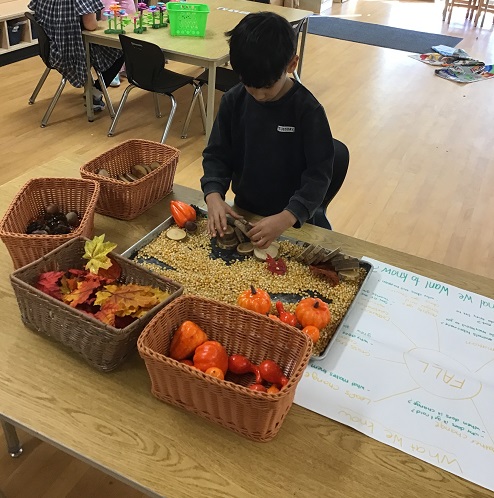
Afterwards, we engaged in a sensory harvest activity where the children used small gardening tools to dig in the soil (in our case it was sand) and plant seeds (popcorn kernels), recreating what a garden might have looked like before and during harvest time. When we focused on thankfulness and kindness, the children watched a short video about being grateful and then participated in a heartfelt discussion about who and what they appreciate in their lives. They named people such as: “teachers, parents, cooks, police officers, and firefighters”, and shared items they were grateful for, like “ toys, clean water, and Nintendos.” They then created vibrant “Thank You” and “You Are Appreciated” cards using colourful paper, beads, stamps, and drawings to express their gratitude. Comments like “I’m making mine for my parents because they feed me and take care of me” reflected empathy and thoughtfulness which demonstrated key social-emotional growth. To conclude our learning, we explored some of the games that Pilgrim and Wampanoag children played during the first Thanksgiving. The group watched a short educational video and then rotated through a couple of game stations such as Cup-and-Ball and Stone Tower Knock Down. These simple, skill-based activities allowed the children to experience the joy of play using materials from nature much like children did hundreds of years ago. Laughter and teamwork filled the room as children called out, “I caught it!” and “I knocked down just the top one”