This past month, the School-age 1 children have been deeply engaged in exploring the concept of sink or float. Their curiosity grew each day as they wondered whether different objects, including our leftover Halloween pumpkin, would sink or float in water. This emerging interest created meaningful opportunities for children to express their ideas, ask questions, and build knowledge together.
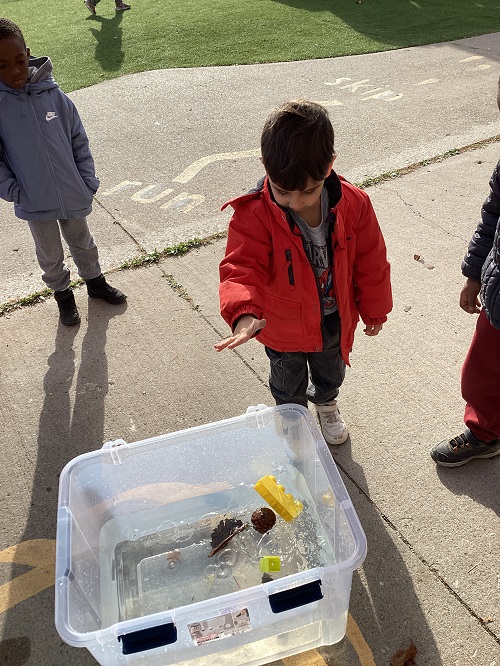
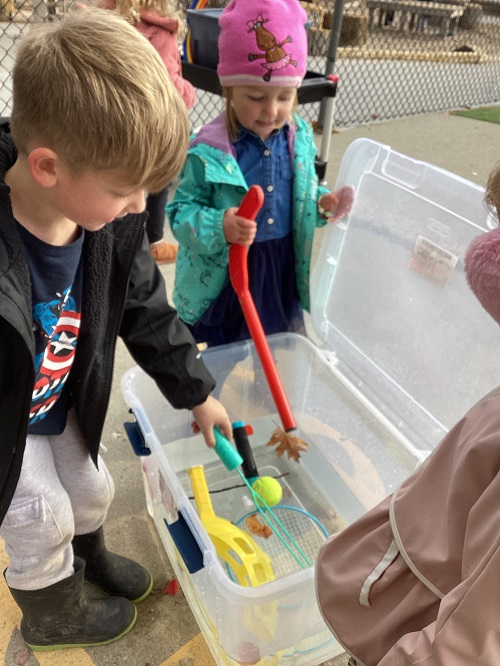
To nurture this curiosity, Educators Velvet and Bibi gathered a variety of materials along with a large, clear bucket of water. Children were invited to collect their own items from outdoors and from our toy cart, strengthening their sense of belonging as their contributions and choices shaped the investigation.
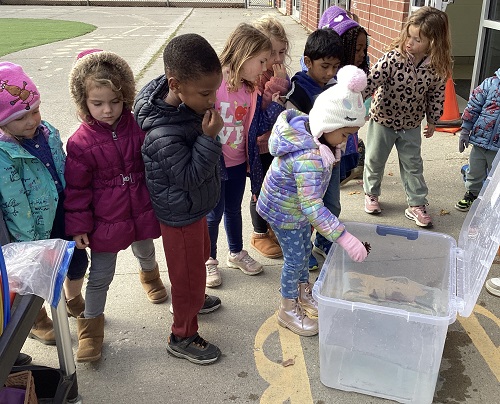
Before placing each object into the water, we paused to make predictions. This sparked rich conversations about size, weight, and texture as children expressed their thinking in different ways, through discussion, gestures, reasoning, and comparison. These conversations supported the expression foundation of How Does Learning Happen? by encouraging children to communicate their ideas and theories confidently.
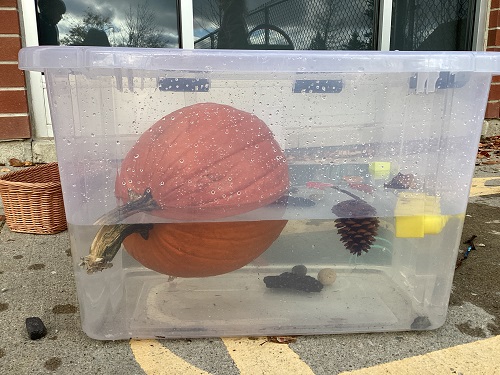
As the experimenting began, some children predicted that large objects always sink, while others believed small objects would always float. These initial ideas opened the door for deeper inquiry. The children were surprised to discover that our large pumpkin floated, while a tiny rock sank immediately to the bottom. This unexpected result led to meaningful discussion about density, helping children learn that an object’s density – not its size – determines whether it will sink or float. We also explored why the pumpkin floated, learning that pumpkins are hollow inside, making them less dense than water even though they appear big and heavy.
Throughout this process, the children were highly focused and enthusiastic, demonstrating strong engagement as they tested their predictions, observed outcomes, and adjusted their thinking. The hands-on water exploration also supported their well-being by offering sensory input, joyful discovery, and opportunities to safely experiment in a calm and inviting setting.
This science experience not only expanded the children’s understanding of how materials behave in water, but also fostered collaboration, problem-solving, and curiosity-driven learning which are key elements of how learning happens.
The children truly enjoyed this investigation, and we look forward to exploring more science and STEM activities as their interests continue to grow in the School-Age 1 program.