Today, we learnt about a beautiful and colourful festival called Diwali, which is celebrated by many Hindu and Punjabi families. Diwali is also known as the Festival of Lights. It is celebrated every year in the months of October or November. It is a very special day filled with lights, colours, decorations, food, and family traditions.
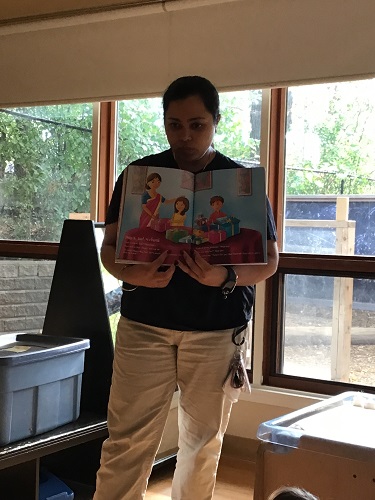
To start our learning, we read a book about Diwali. The book explained the meaning and story behind the festival. We learnt that Diwali celebrates the return of Lord Rama to his kingdom after 14 years of exile. The people of Ayodhya were so happy to see him that they lit lamps all around the city. That is why Diwali is celebrated with lots of lights, to show the victory of good over evil and light over darkness.
We also talked about the different ways people celebrate Diwali. Families clean and decorate their homes, wear new clothes, light candles and diyas (oil lamps), eat sweets, and spend time with loved ones. We also remembered the henna we had put on our hands last week. Today we learnt that henna is often used during Diwali as part of dressing up and celebrating in a traditional way.
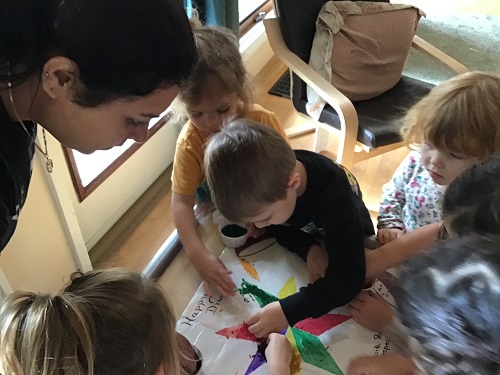
After the story, we moved on to a fun and creative activity — making rangoli. Rangoli is a colourful pattern that people make at the entrance of their homes to welcome guests and bring good luck. It is usually made using coloured powders or flowers, but today we used coloured rice instead. Mary helped by making the coloured rice using food colouring.
The children were very excited to pick their favourite colours and start decorating the rangoli. We worked in small groups, and each group had a turn to decorate a big flower drawn on cardboard. The children took turns filling the spaces with coloured rice. Everyone had a chance to participate, showing teamwork, sharing, and fine motor skills.
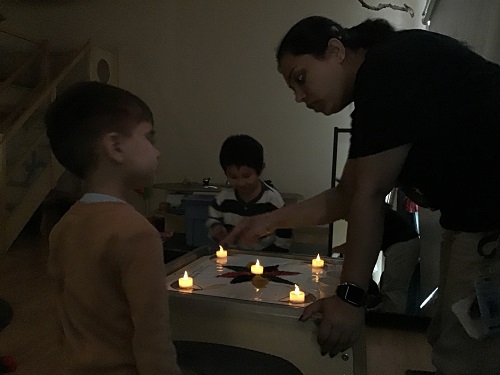
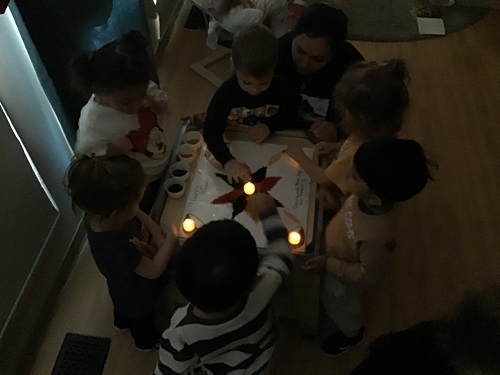
When the rangoli designs were complete, we added lit candles around them to make them look even more festive and bright. The children were very proud of their creations and loved seeing the candles glowing around the colourful rice in the dark of the room.