Welcome to Toddler 1!
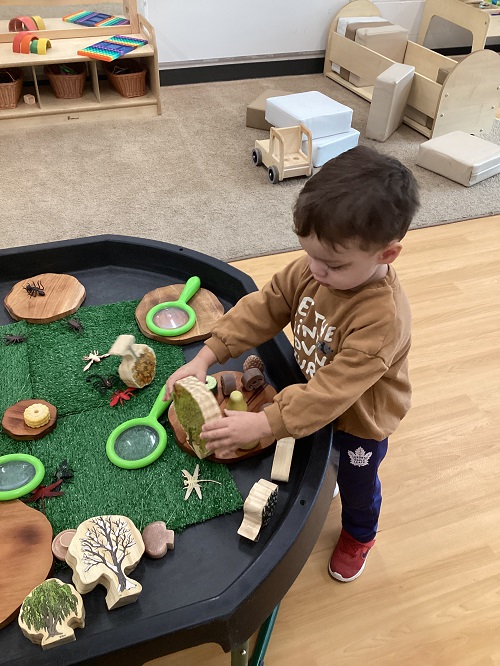
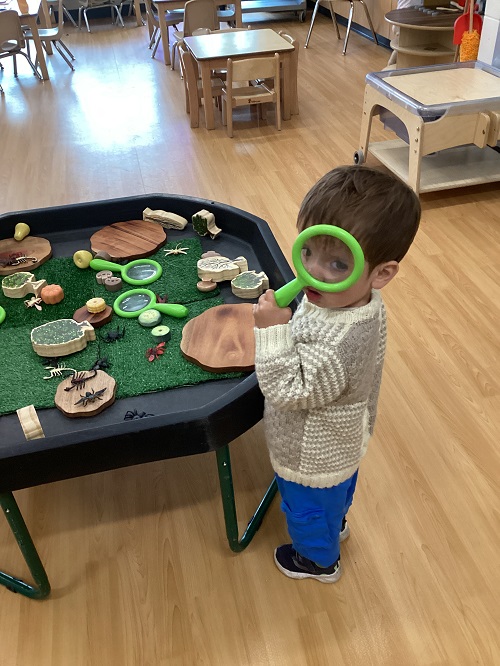
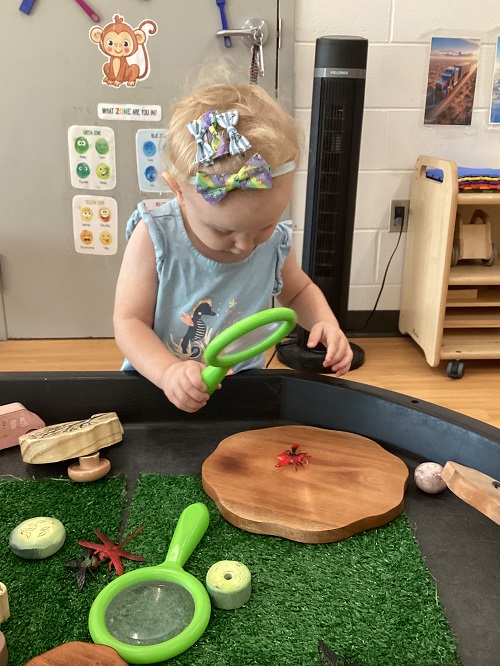
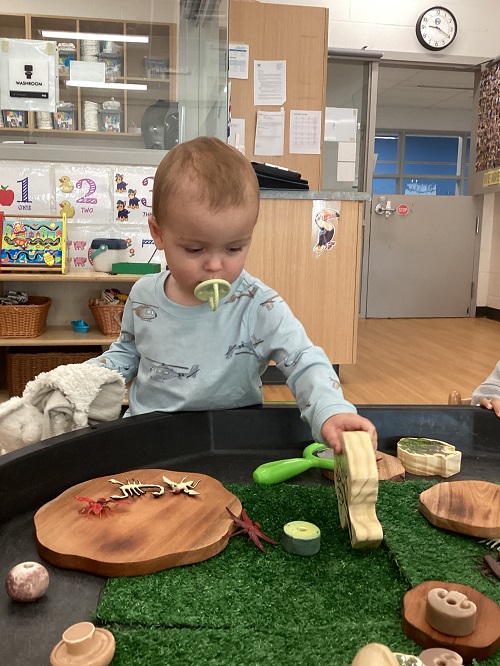
Throughout September we set out various activities on the tuff tray, this peaked a lot of interest in our group and kept them rather busy. To continue with this interest, we set up the tray using various Autumn inspired materials. We filled the tray with artificial leaves, small wooden trees, tools such as magnifying glasses and toy bugs such as beetles, ladybugs and worms. The children were immediately drawn to the bright colors and various textures. They were eager to explore what they could find.
Ella picked up a magnifying glass and carefully examined a ladybug saying "It's red". Willow reached for a beetle and said, "It's shiny!". Mateo gently looked underneath them for more insects. We watched as Benjamin used materials such as wooden discs and rocks to stack, he smiled as the educators asked “are you making the bugs a habitat?”. All the children showed excitement and curiosity as they discovered different bugs! We observed a lot of imaginative play, communication and problem-solving. The children shared tools, took turns and asked questions such as "What's this?" or "Where do they live?"
Through this open-ended exploration, the toddlers were engaging all their senses and making meaningful connections with the natural world around them.
The children worked on developing their language skills by using descriptive language to talk about what they saw ("tiny”, “spikey", "red", "fast"). They asked questions and listened to each other, encouraging conversational skills and building social-emotional connections with their peers.
They enhanced fine motor skills by picking up small bugs, holding magnifying glasses, and manipulating natural materials; helping to strengthen hand-eye coordination and dexterity. The group shared materials and worked together, practiced turn-taking, cooperation, and empathy which showed social skills.
The children also engaged in imaginative play by role-playing as bugs or bug explorers, and using the tray's materials to build habitats. They explored the bugs' textures and colors, used tools to manipulate the bugs, and sort them into groups, fostering curiosity and early learning about nature and the concept of "bug worlds”.