Over the past few weeks, our School Age 1 group has shown a strong interest in messy play and exploring their gross motor skills on the RisingOaks natural playground that we have been so lucky to share with our preschool programs! What began with simple experiences like filling buckets of sand or digging with scoops and playing tag with friends has gradually developed into richer, and more confident outdoor play.
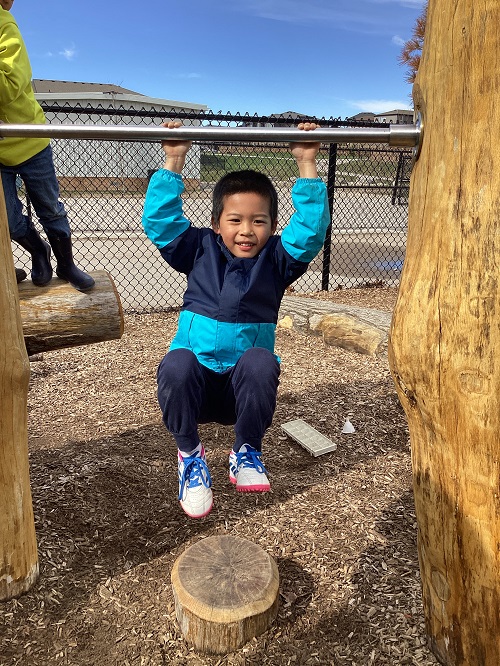
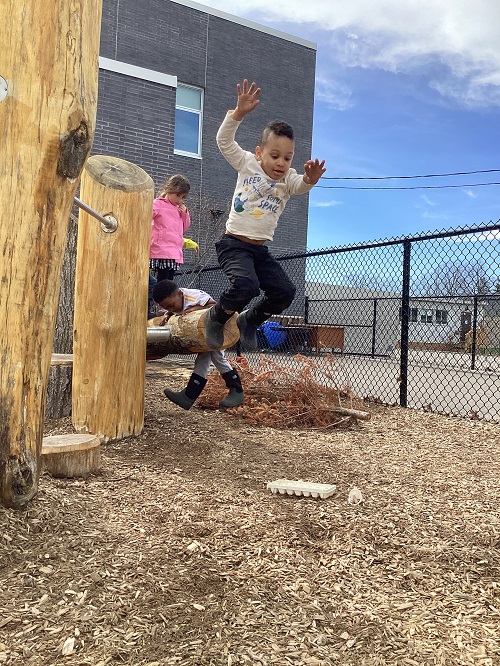
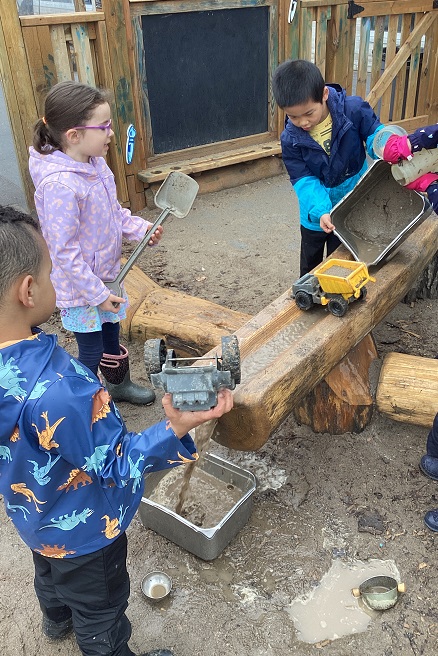
As the weather transitioned into spring, we’ve noticed many children slowly but surely stepping out of their comfort zones. Whether it’s challenging themselves on the climbing structure, running and balancing across wooden planks, building ramps, being fully engaged in water and sand play, or even attempting to do pull-ups on the bar, the children are becoming more willing to take risks and try new things.
It has been exciting to observe this growing confidence and independence over time. The children are not only strengthening their gross motor abilities, but also building resilience, cooperation, and a stronger sense of self through their outdoor experiences.
Keeping this engagement in mind, we can reflect on the benefits of outdoor learning for JK/SK children. Outdoor play is a vital part of early learning because it offers children real, hands-on experiences that help them make sense of the world in different but meaningful ways. Most children learn best through active exploration, and being outdoors naturally encourages movement, curiosity, and discovery.
Since this playground is also shared with the preschool programs, it provides an important opportunity for children to practice respect, cooperation, and consideration for others. It also reinforces the importance of keeping shared spaces safe, ensuring that everyone can enjoy the playground in a positive way.
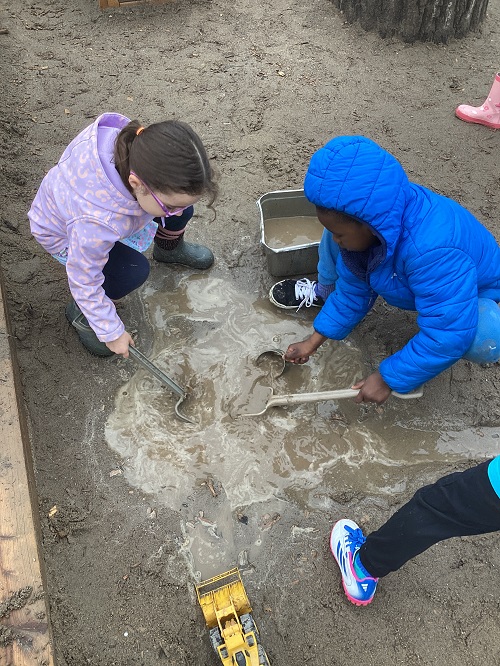
With all the rain we’ve been getting lately, we’ve noticed lots of children are showing more interest in water play - specifically, the flow of water.
As children pour water, build with natural materials, or figure out how things flow and move, they are exploring early ideas around cause and effect, problem-solving, and scientific thinking. They are testing ideas, noticing what works, and trying again when something doesn’t—learning through trial and error in a very real context. Dirk excitedly shared, “I’m making a moat to this huge puddle!” This shows not only creative thinking, but also an emerging understanding of water movement and construction.
When children are running, climbing, balancing on logs, or digging a hole in the sandbox, they are building their gross motor skills, strength, balance, and coordination. They’re also learning how their bodies move in space, how to judge risks, and how to adjust their actions as they go. These physical experiences support confidence and independence in a very natural way. During climbing and swinging experiences, another interaction was observed: Amber said to Luiza, “Woah Luiza you swing so high!” followed by Luiza’s response, “Yeah! It’s because I use my legs to make me go higher.” These exchanges demonstrate how children are beginning to reflect on their own abilities and explain their actions, showing growing awareness of how their bodies work and how effort influences movement.
Socially, outdoor play provides children with valuable opportunities to communicate, share ideas, and collaborate with their peers. In this environment, we often observe children engaging in imaginative role-play such as “family,” “baker,” or “chef,” where they negotiate roles, build shared storylines, and extend their play through cooperation and creativity. When Amber approached a group of 4 children playing in the mud kitchen, she asked, “What kind of game are you guys all playing?” In response, Child M said “We’re playing family! These are my two babies, and I’m the mommy!” and Child I said, “And I’m their chef, and I cook and bake lots of things for them!” These comments showcase the children's ability to include hands-on messy exploration while also engaging in imaginative play.
These experiences also support independence as children work through small challenges, resolve conflicts, and learn to navigate friendships in the moment. Through these interactions, they are naturally developing communication skills, empathy, and cooperation in meaningful, real-world contexts.
Emotionally, outdoor play helps children build resilience. They take safe risks, try new challenges, and learn to trust their own abilities. Whether they succeed right away or need to try again, they are building confidence and persistence.
Overall, the outdoor environment provides children with the space and freedom to move, think, explore, and connect in meaningful ways. It supports their learning through active, hands-on experiences that build confidence, curiosity, and independence. As children engage with the natural world and one another, they are developing important physical, social, and cognitive skills that continue to grow over time. These joyful, real-world learning moments create a strong foundation for new learning, where children can feel capable, engaged, and excited to discover more.