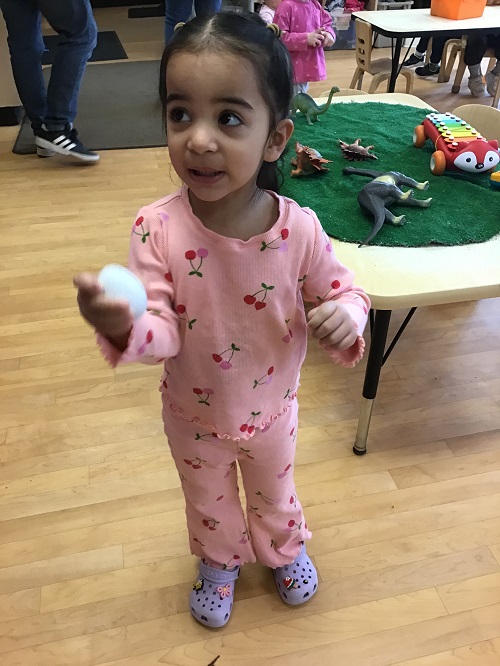
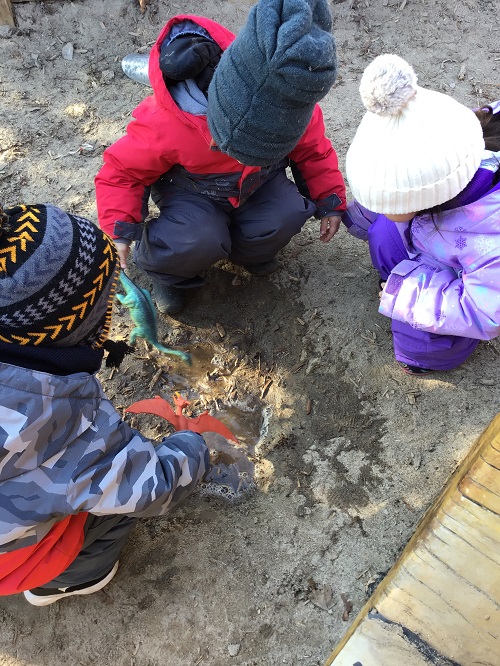
 This month, the toddlers demonstrated a strong and sustained interest in dinosaurs, which provided rich opportunities for pedagogical exploration and inquiry-based learning. This emerging interest was observed consistently across the environment, as children gravitated toward dinosaur toys, books, and conversations. Educators responded by thoughtfully integrating dinosaur experiences throughout the day, creating a responsive and engaging learning environment that reflected the children’s curiosities.
The children participated in a variety of hands-on and interactive activities, including dancing and singing dinosaur songs, creating rhythms and sounds using “Dino eggs,” exploring the dinosaur play area, listening to and engaging with dinosaur stories, and experimenting with making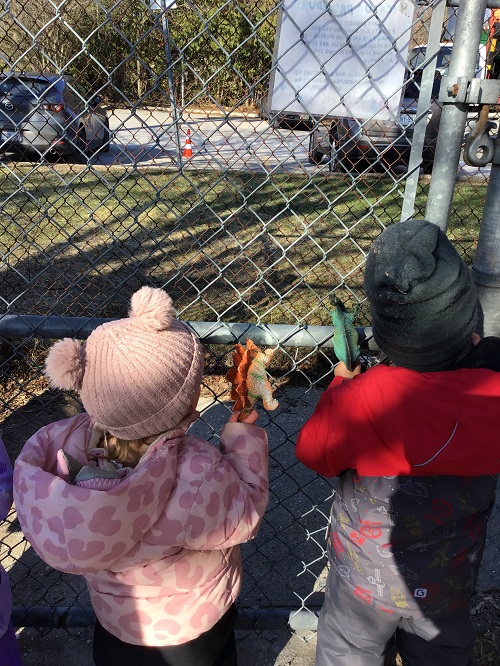 their own dinosaur sounds. These experiences encouraged active participation and allowed the children to express themselves in diverse ways, supporting communication and language development while fostering a sense of joy and collaboration.
This interest in dinosaurs created meaningful opportunities for learning across multiple developmental domains. Through these play-based experiences, children were able to build confidence and independence as they made choices and explored materials. Their creativity was supported as they engaged in imaginative and symbolic play, often taking on roles and creating their own narratives around dinosaurs. Additionally, both fine and gross motor development were strengthened through activities such as manipulating small objects, moving their bodies during music and dance, and exploring different ways of interacting with materials.
In response to the children’s growing curiosity about painting, educators introduced a dinosaur art experience to extend their learning. Paint and dinosaur figures were intentionally placed on the table to invite open-ended exploration and experimentation. This activity encouraged the children to investigate cause-and-effect relationships as they observed how different parts of the dinosaur figures could create unique prints and textures. It also supported sensory exploration, as children engaged with the tactile experience of paint. During this activity, Avriella demonstrated creativity and problem-solving by using not only the dinosaur’s feet but also its tail to make a variety of prints, showing an emerging understanding of how different tools can be used in multiple ways. Aurora fully immersed herself in the experience by incorporating her hands into the painting process, highlighting her willingness to explore materials through sensory play and self-expression.
These moments reflect the children’s developing curiosity, creativity, and confidence in exploring new ideas. Educators observed that when children’s interests are acknowledged and extended in meaningful ways, engagement deepens and learning becomes more authentic and impactful. The dinosaur inspiration served as a unifying thread that connected different areas of the program, allowing children to revisit ideas, build on prior knowledge, and make connections across experiences.
Moving forward, this interest can continue to be nurtured by offering a variety of sensory-rich and open-ended experiences related to dinosaurs. Opportunities such as storytelling with props, small world play, textured materials (e.g., sand, water, or clay), and collaborative art projects can further support inquiry and exploration. By continuing to follow the children’s lead and build on their interests, educators can foster a learning environment that promotes curiosity, creativity, and holistic development across all domains.