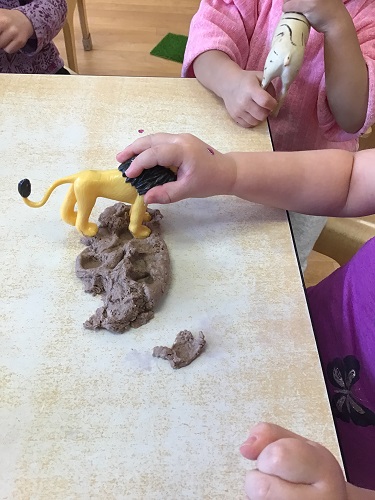
 The toddlers showed great curiosity and engagement while exploring wild animals through a variety of hands-on activities. The learning began with the celebration of the World Wildlife Day, which invited children to play with animal figurines such as lions, giraffes, and polar bears. To extend their play, the educator introduced brown playdough to represent mud. Children used the animals to press footprints into the dough and experimented with how the animals moved through the “mud.” Some children created small pieces of dough and used them as a ‘rock” in their imaginative play.
As children were very interested in previous activities; the next day an educator introduced animal puzzles to the children that displayed different parts of an animal. They looked closely at the images and worked to match the pieces together. As they played, children named animals and noticed features such as stripes, spots, and tails. They were excited when they successfully matched puzzle pieces and proudly shared their discoveries with educators and peers.
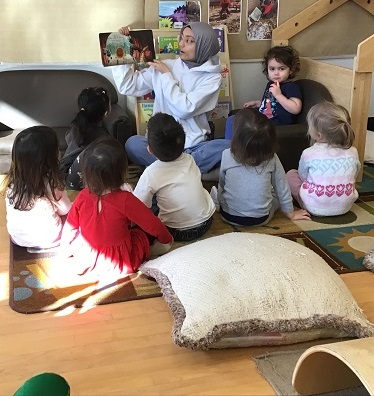
To further connect the children’s learning, we read the story The Very Cranky Bear by Nick Bland. The children listened attentively as the story introduced animals and their unique features, such as the lion’s mane, zebra’s stripes, moose’s antlers, and sheep’s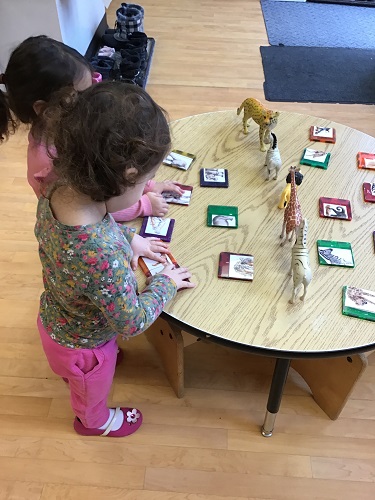 wool. The story encouraged discussion about how animals look different and how they help and support each other.
These experiences supported several areas of toddler development. Through hands-on exploration with playdough and animal figures, children strengthened their fine motor skills, literacy skills and sensory exploration while learning about cause and effect as they observed footprints and marks in the dough.
The puzzle activity encouraged problem-solving, observation, and cognitive development, as children compared animal features and recognized patterns like stripes and spots. Their conversations with educators and peers also supported language development and vocabulary building, especially when naming animals and describing their characteristics.
Reading The Very Cranky Bear helped children make meaningful connections between stories and real-life play. The story also supported social-emotional learning, as children were introduced to themes of empathy, kindness, and understanding others’ feelings.
Overall, the children demonstrated curiosity, imagination, and collaboration while exploring animals through sensory play, puzzles, and storytelling.
Possible next steps:
- exploring animals and their habitats through books, sensory materials, and creative play experiences.
- We may introduce materials such as animal textures (soft wool, fur-like fabric) to help children explore how animals feel.
- Children will also be encouraged to explore animal sounds, movements, and habitats through music, dramatic play, and outdoor exploration.