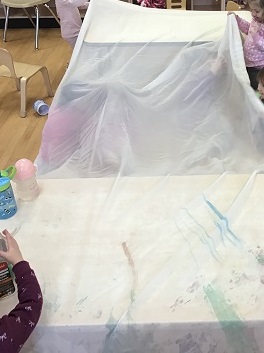
 In the toddler room, our friend Otto experienced some difficulty transitioning back into the classroom after a long Christmas break spent with family. An educator responded by offering comfort through a warm hug and inviting Otto to build a fort together. This approach helped Otto feel supported and reassured, allowing him to transition more smoothly into the classroom
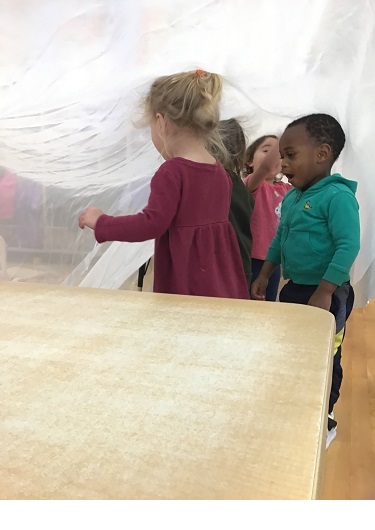 environment.
As the fort was being built, Otto began to giggle, crawl through it with his friends, and excitedly shared, “I’m having so much fun!”. This moment showed that supporting Otto’s emotional needs not only helped him regulate but also encouraged joy, connection, and engagement with peers.
Building on this positive experience, educators have continued to use fort-building as a strategy to support emotional regulation. The fort now serves as a safe and cozy space where children can go when they are experiencing strong emotions or need comfort. The soft textures of the sheets and the dimmed light inside the fort create a calming, secure environment. By offering this space, children are able to relax their bodies, feel a sense of control, and re-engage with the classroom when they feel ready.
This experience shows that creating a cozy, playful; safe space like a fort is an effective way to support toddler’s emotional regulation and transitions. It helps children feel secure, calm their strong emotions, and rejoin classroom activities in a positive and confident way. I wonder about different strategies for self-regulation and we can promote these in the toddler room.