 The preschoolers have been demonstrating a strong and ongoing interest in sensory play, particularly when it involves combining animal figures and human figures. This interest has been observed consistently across multiple sensory
 experiences. Whenever sensory materials such as play dough or slime were offered, the children independently brought animal and human figures into the play, using them as meaningful props within their exploration.
During these experiences, the children incorporated the figures into pretend play, pressing them into the sensory materials, creating scenes, and using the materials to represent different environments. The sensory materials became a medium through which the children expressed imaginative thinking, storytelling, and social interaction. Children were observed manipulating the materials with purpose-rolling, flattening, and shaping the dough or slime-while narrating actions and roles for the figures. This repeated behaviour highlights the children’s deep engagement and curiosity, as well as their ability to blend sensory exploration with symbolic and imaginative play.
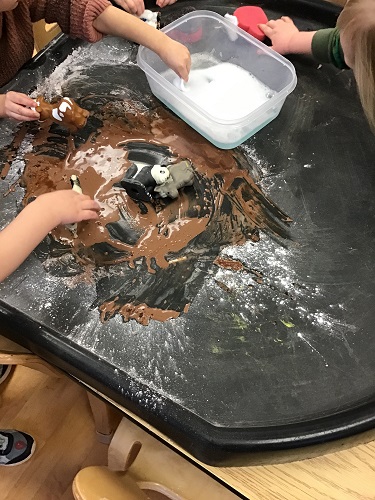
To better understand and scaffold the preschoolers’ interests, a variety of sensory experiences were intentionally offered. One such experience was a cocoa powder oobleck invitation, presented simply as a sensory mixture. The purpose was to observe how the children would engage with the material and whether their ongoing interest in combining sensory play with animals would naturally emerge.
As the children began exploring the cocoa oobleck, they quickly drew connections to familiar experiences. Without any prompts, several preschoolers brought animal figures into the mixture, transforming the sensory experience into imaginative “mud play.” The children immersed the animals in the oobleck, observing how the mixture changed between liquid and solid as they touched and moved it.
To extend the children’s ongoing interest, educators collaborated with the preschoolers to create a pretend farm in the classroom. Together, we added a variety of farm-related materials such as paper cut-out chickens, Easter eggs, farm animals, and other open-ended props. As the space took shape, educators engaged the children in conversation, asking questions like “What belongs on a farm?” and “What do you usually see on a farm?” This encouraged the children to share their ideas and build the environment collectively.
The learning did not stop with setting up the farm-it continued to evolve through imaginative play. Cole decided to make a pretend apple pie, using one of the classroom shelves as an oven. When asked why he was cooking apple pie on the farm, he explained that he had picked apples from the farm and was making apple pie for the animals.
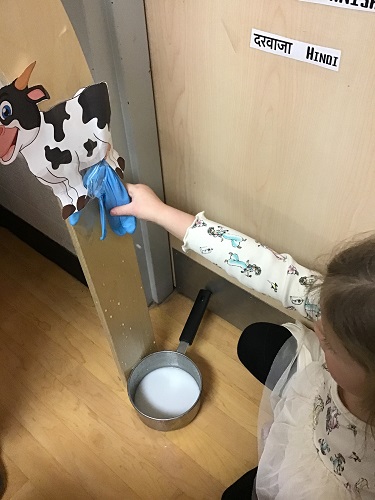
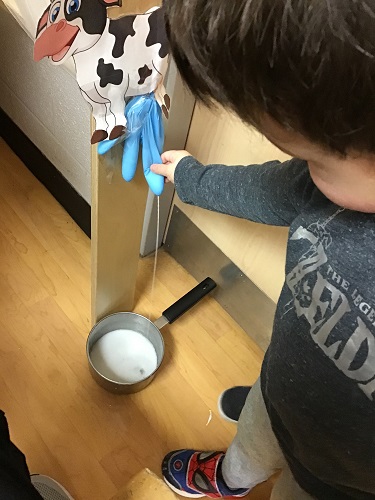
Presley and Lyle extended the play further by using the milk collected after milking the cows. They decided to make ice cream for the animals, transforming the milk into a new and creative use. Meanwhile, Oscar explored a different idea-he chose to use the milk to feed the cows and even give them a bath, demonstrating his own understanding and interpretation of farm life.
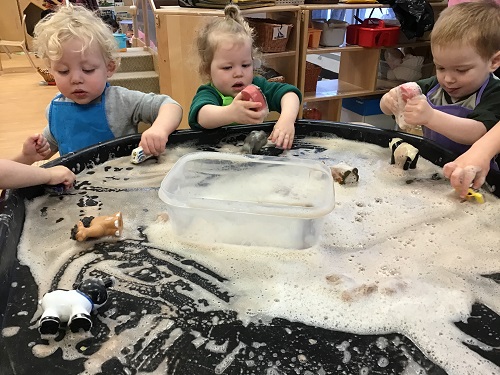
This pretend farm experience naturally supported sensory exploration by engaging the children’s senses through hands-on, imaginative play. The pretend cooking and milking experiences further deepened sensory engagement. By transforming everyday classroom objects into meaningful sensory tools, the children demonstrated how imaginative play and sensory exploration are deeply connected. This experience allowed children to integrate sensory input with symbolic thinking, supporting self-regulation, creativity, and a deeper understanding of their world.