Over the past few weeks, we have noticed a growing interest among the preschoolers in exploring patterns and puzzles. The children are consistently choosing puzzles during different parts of the day, demonstrating focus, curiosity, and persistence as they work through them.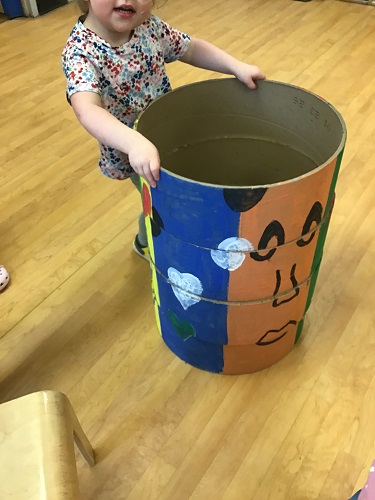
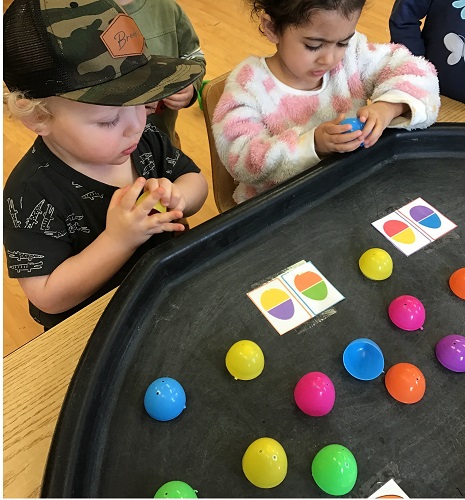 This interest is not limited to indoor play. For example, Lily enthusiastically asked the educator if the puzzles could be taken outside, sharing that it is her favorite activity. This request highlighted how meaningful and engaging this experience is for her and others in the group.
As we continued to observe, it became evident that the children’s curiosity extends beyond traditional puzzles. They are drawn to activities that involve repetitive patterns and sequences. A great example of this was when we created a hopscotch game using chalk outdoors. The children eagerly participated, showing excitement as they followed and created patterns through movement and play.
The children’s strong and consistent interest in puzzles and pattern-based activities suggests that they are actively developing foundational mathematical thinking skills. Their repeated engagement shows curiosity, persistence, and a desire to make sense of patterns, sequences, and problem-solving processes.
Lily’s request to take puzzles outdoors highlights how meaningful and motivating these experiences are for the children. It also shows their ability to advocate for their interests and extend learning beyond the classroom environment. The children’s engagement with activities like hopscotch further indicates that they are exploring patterns not only through materials but also through movement and play. This demonstrates that their understanding of patterns is becoming more flexible and can be applied in different contexts.
As we continue to build on the children’s interest, we intentionally introduced activities that support fun, hands-on learning. One such experience involved the educator using large cardboard wheels decorated with different colors and patterns.
This activity became a meaningful extension of the children’s interests, as they were encouraged to stack and arrange the cardboard wheels by matching the patterns. It provided a rich learning experience that supported multiple areas of development. The children engaged in gross motor skills as they lifted and balanced the larger pieces, fine motor skills as they carefully aligned the patterns, and cognitive development as they recognized, compared, and recreated sequences.
The activity not only reinforced their understanding of patterns but also encouraged problem-solving, coordination, and collaborative play in an engaging and playful way.