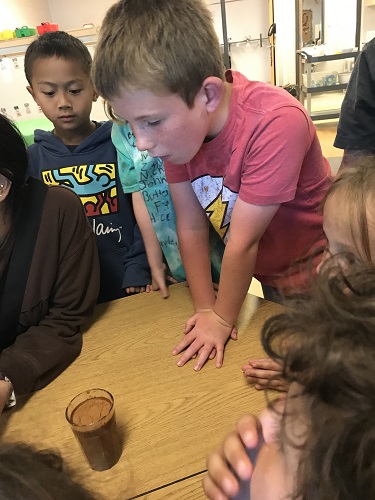
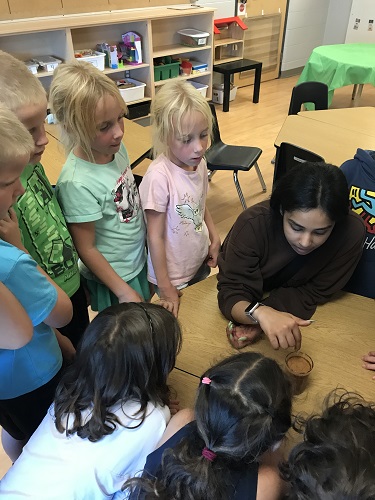
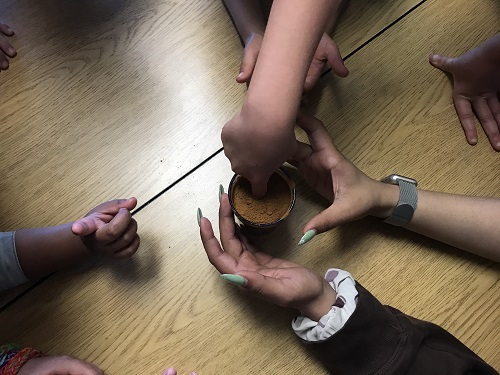
Today, we conducted a fun and simple science experiment to explore the concept of hydrophobic substances. I started by explaining the steps of the experiment to the children. I filled a clear glass with water and gently sprinkled cinnamon powder on top. Then, I asked the group what they thought would happen if someone dipped their finger into the water. Some curious and eager guesses followed “My finger will get wet?” said a few children. Sam excitedly added, “Oh! I know what happens, Anshika, it’s cool!” To test it out, I invited Adelina to come forward and dip her finger into the glass. She slowly put her finger in, and to everyone’s surprise, the cinnamon powder stayed on the surface, and her finger came out completely dry. “WHAT?” she exclaimed in disbelief. The rest of the group gasped and leaned in closer, visibly amazed. A few kids tried it again on their own giggling. This led to a great teachable moment, I explained that cinnamon is a hydrophobic substance, which means it repels water. That’s why it stayed on the surface and why their fingers didn’t get wet when passing through it. We talked about how some materials don’t mix with water and why this happens, introducing them to basic properties of materials in a hands-on, memorable way. The children were highly engaged, asked thoughtful follow-up questions, and shared other things they thought might be hydrophobic too like oil or wax. It was a wonderful moment of discovery and curiosity, and a perfect example of how simple experiments can spark scientific thinking.