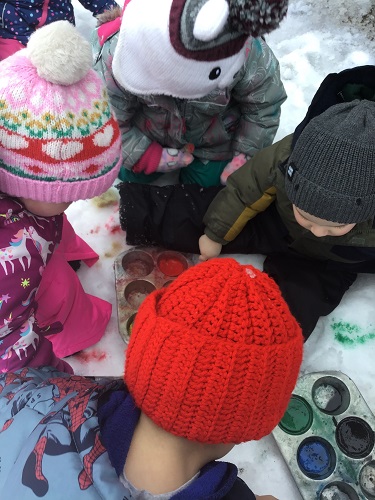
During the winter season, our toddlers have begun adjusting to the cold, snowy weather outdoors. Bundled up in their thick winter gear and mittens, they eagerly explore and enjoy the winter fun. In addition to sledding and shoveling snow (while resisting the very tempting, and all too age appropriate urge, to “eat” it) the educators have introduced paintbrushes and watercolours outside.
The snowy landscape became a perfect natural canvas for outdoor painting. Our toddlers enthusiastically dipped their brushes into bright colours and painted directly onto the snow, transforming it into shades of black, orange, and red. Theo excitedly observed, “The snow is black!” Orla carefully dipped her brush into the orange palette and confidently said, “Orange!” as she painted.
As the children painted, we played their favourite songs, doubling the fun and encouraging creativity in a different way- with our bodies. Through this experience, our toddlers demonstrated colour recognition and expressive language while connecting, communicating, and interacting with one another.
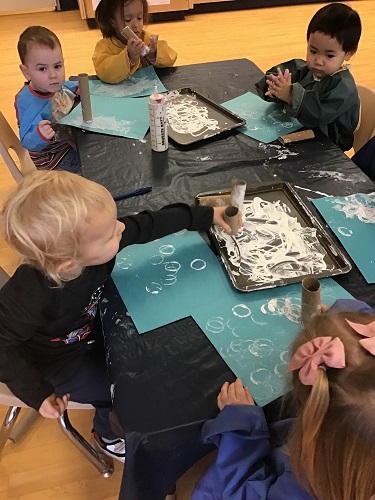
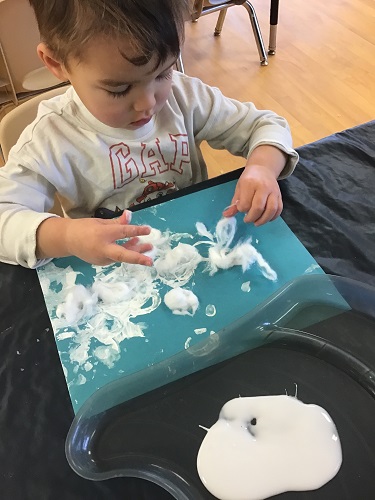
To extend their learning about snow indoors, educators invited the children to explore snow-themed art in the classroom. Using paper rolls, cotton balls, white paint, and glue, toddlers were guided through a creative process. First, they stamped circles onto paper. “It’s a circle!” Noah exclaimed. Next, they used their fingers to pull the cotton balls apart, making them smaller and lighter, before dipping them into glue and placing them onto their artwork. The children repeated this sequence many times, strengthening their fine motor skills while engaging their senses. Before completing their artwork, the children were encouraged to touch and feel the cotton on the paper. Jake beamed with joy as he explored the fluffy texture, though he also showed some discomfort with the sticky glue on his fingers. Noticing strands of cotton clinging to his hands, he thoughtfully wiped his fingers on his shirt to remove the glue.
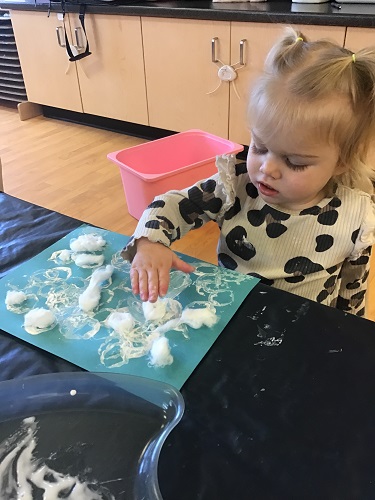
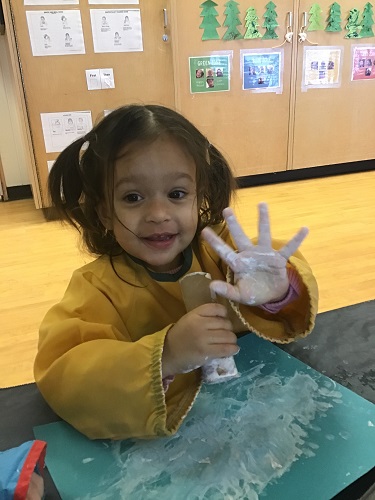
This rich sensory experience allowed toddlers to explore textures, practice problem-solving, and deepen their connection to nature through art. It was a joyful and meaningful way for them to engage their senses while expressing creativity and curiosity.