Learning about the concept of planting flowers with children is so much more than an annual springtime activity—it’s a rich, hands-on learning experience that nurtures curiosity, responsibility, and wonder.
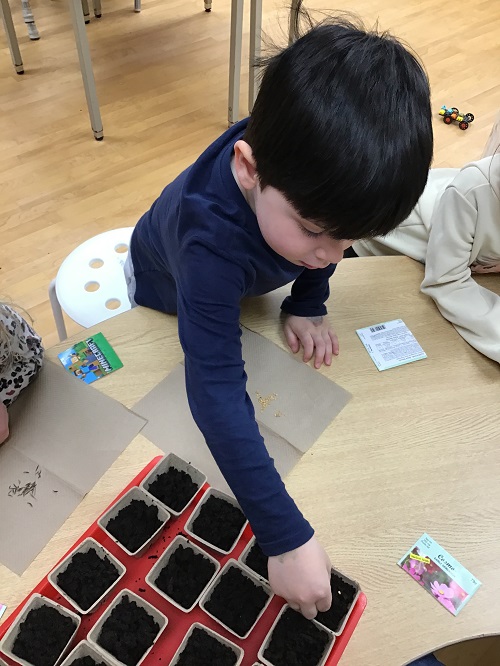
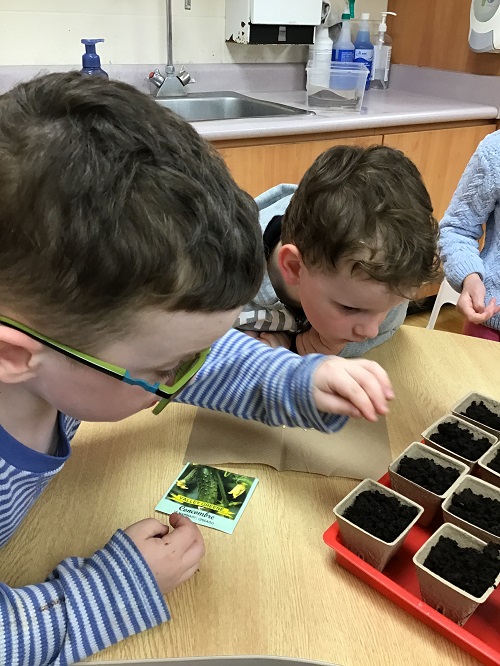
As the children in School-Age group 1 dug into the soil, they engaged their senses—feeling the various textures, noticing smells, and observing the tiny details of seeds and roots. These moments sparked natural questions amongst the group: How do plants grow? What do they need to survive? The educators in the program took this opportunity to learn alongside the children and to begin to understand basic scientific concepts like growth, life cycles, and the role of sunlight and water.
This planting experience also supports the development of fine and gross motor skills. Scooping soil, pouring water, and carefully placing seeds all require coordination and control. At the same time, working together in a shared garden space encourages cooperation, turn-taking, and communication.
Perhaps most importantly, caring for plants over time teaches patience and responsibility. Children learn that growth doesn’t happen instantly—it requires consistent care and attention. Watching their flowers bloom gives them a sense of pride and accomplishment, reinforcing the idea that their actions have meaningful outcomes.
In these simple yet powerful moments, children are not just planting flowers—they are planting the seeds of lifelong learning.