Science experiments play a powerful role in children’s development by encouraging curiosity, exploration, and critical thinking. When children engage in simple hands-on activities, they are not just having fun, they are actively learning how the world works. Through experimenting, children begin to ask questions, make predictions, and observe outcomes, which are essential skills for cognitive development.
In addition to building thinking skills, science experiments support language development. As children describe what they see, hear, and feel, they expand their vocabulary and learn to communicate their ideas more clearly. These interactions, especially when guided by adults, help children develop confidence in expressing themselves and participating in discussions.
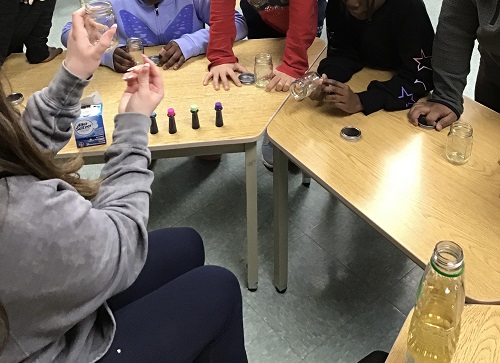
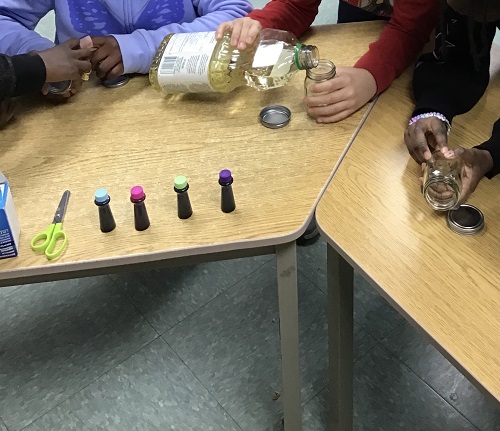
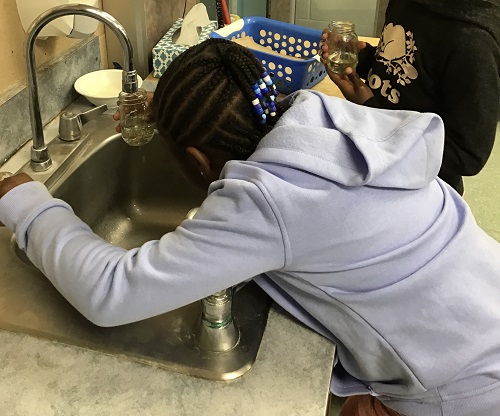
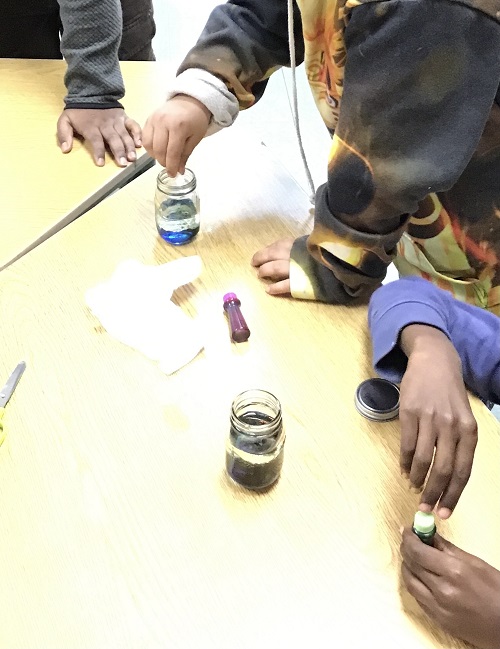
One afternoon, our placement student, Ainsley, did a science experiment with the children. She brought glass jars, oil, food colouring and effervescent pastilles to make a lava lamp with them. The children were all very excited and demonstrated a strong sense of engagement as they actively participated in exploring cause and effect through hands-on investigation. They showed curiosity by asking questions about the materials and making predictions of what would happen when we mixed the ingredients.
This experience fostered a sense of belonging as children worked collaboratively, shared materials, and supported each other’s inquiries. Through teamwork and positive interactions, they built relationships and developed respect for different perspectives. Also, it promoted fine and gross motor skills, as the children had tasks such as pouring, mixing, and handling small objects, which helped improve coordination and control. At the same time, children learned to follow steps and stay focused on a task, which strengthens their attention span and self-regulation.
Throughout the whole activity, the children showed pride in their efforts and encouraged each other on each step, helping to build their emotional confidence and self-regulation skills. Moreover, they demonstrated expression by communicating their thoughts, observations, and theories using descriptive language and gestures. They expressed their excitement and learning through discussion and shared reflections with peers and educators.
The experiment was a success, the children were so proud of their lamp and of their peers, complimenting their choice of colour and even how the bubbles were going up and down. At some point, they started to discuss if the ingredients mixed together were making the lamp glow in the dark, which can be an extension for this activity: making a lamp that will actually glow in the dark.
Overall, successfully completing an experiment can boost children’s self-esteem and sense of achievement, encouraging a positive attitude toward learning; at the same time, it provides a meaningful and engaging way for children to develop a wide range of skills by combining play with learning.