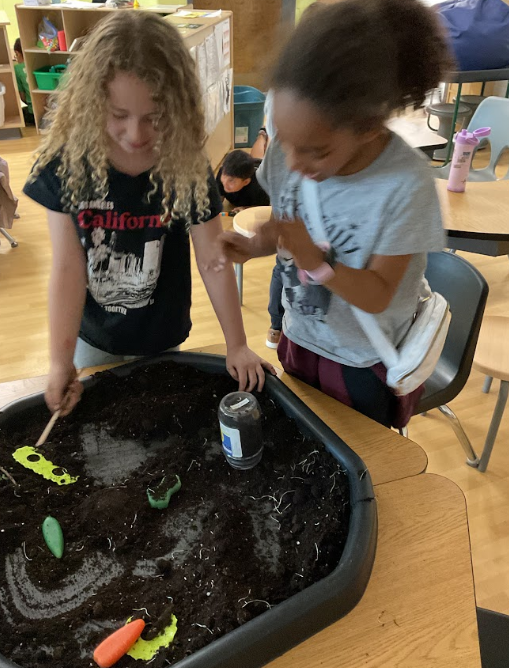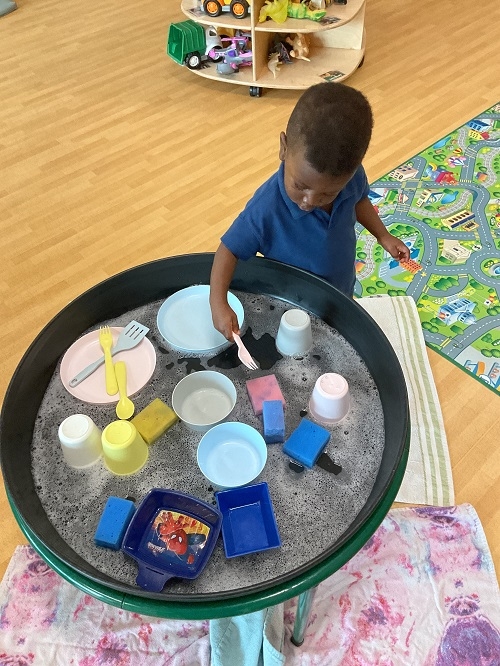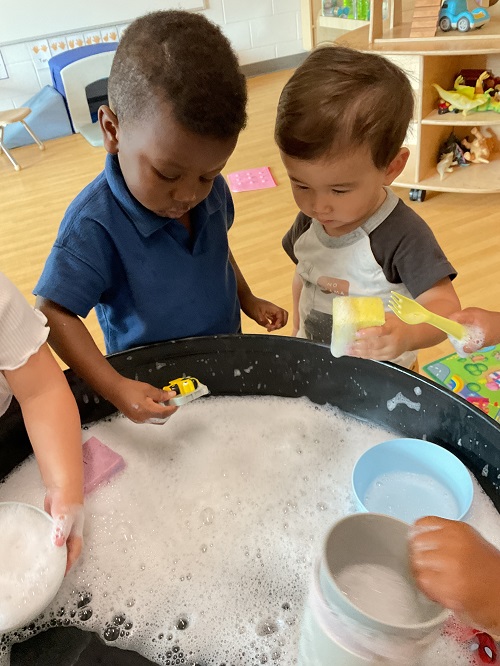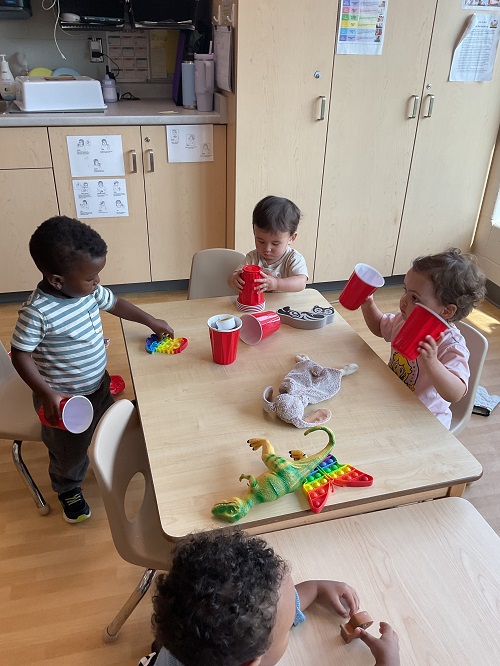
The School Age children at RisingOaks Early Learning | St. Patrick explored a variety of building materials such as tools, LEGO, and large cardboard boxes to design creative structures, collaborate, problem-solve, and test their ideas. Through these hands-on projects, they developed fine-motor skills, critical thinking, resilience, and confidence while engaging in meaningful teamwork and discussion.
Program Name: School-age 2

The School-age 2 children at RisingOaks Early Learning | St. Patrick have shown a strong and ongoing interest in building and creating structures, roads, and forts since the start of the school year. They have experimented with a variety of materials wood, cardboard, and plastic pieces and enjoyed using figurines and craft supplies to bring their creations to life.

To extend this interest, we introduced real-world building materials such as hand tools, an outdoor toy cart, screws, washers, and bolts. We also added new LEGO build sets and large cardboard boxes, supporting the children as they explored different ideas, shapes, textures, weights, and sizes.

Some children chose to design buildings and roadways before school, using fine-motor skills and creativity to sketch and construct their ideas. As they worked together, each child contributed different materials, toys, and perspectives, collaborating to create sustainable and stable structures. They engaged in meaningful problem-solving conversations, such as noticing, “If we add a heavy brick on top of the wood pieces, it might break the whole structure.”

A highlight of the week was when a small group built an outdoor cart completely from scratch using real tools. They read instructions, interpreted diagrams, and determined how each piece fit together. I supported them throughout the process, and they demonstrated impressive teamwork, persistence, and problem-solving skills.

We also spent a week building large structures from cardboard boxes. The children used tape, additional cardboard pieces, markers, and stickers to customize their designs. What began as a friendly competition between two teams each wanting to “outdo” the other evolved into a collaborative celebration of creativity. By the end, the children proudly shared and admired both unique forts, complimenting the ideas and designs of their peers.

These process-based building experiences promote fine-motor development, critical and creative thinking, collaboration, resilience, and rich conversations with both peers and educators. Most importantly, they support confidence-building and empower school-age children to explore their ideas with pride and curiosity.

Child building cart

group of children decorating cardboard

road and structure


The children were presented with shapes drawn on a paper, as well as small foam shapes. They made patterns, and sorted them.
Program Name: School-age 1

On a tuff tray, the children at RisingOaks Early Learning | St. Patrick were presented with four large shapes drawn on a piece of paper covering the whole tray. There was a heart, triangle, circle, and square, as well as some small foam shapes that matched the large ones. They were not asked to do anything with it, but instead on their own they decided that they were going to sort the foam shapes, saying “We need to sort the shapes!”.

They placed all the hearts inside the large drawn one, and did so with the other three shapes. From there they decided to take it a step further and sort the shapes in each category into the same colour groups as well, “Let’s sort the colours!” we heard one child say to another. We then observed them putting them into rainbow order as well!

After all the sorting, they looked at the shapes and noticed that there were more of some than there were of others. They noted “There’s the most squares.”, and then counted how many there were, we counted 23 squares in total! The children participating in this activity were engaged with it for a while, and seemed to love sorting and matching the shapes. This activity was a great way for them to build their categorizing, shape and colour recognition, and team work skills!

2 children at tuff tray

child at the tuff tray

shapes on tuff tray


This month, the children at RisingOaks | St. Patrick explored how ice forms and melts through a hands-on activity using frozen animal and flower stones. They used tools, sensory play, and imaginative thinking to investigate the properties of ice, develop problem-solving skills, and learn about seasonal changes. The experience supported early science learning while sparking excitement and curiosity.
Program Name: Preschool 1

This month, the Preschool 1 classroom at RisingOaks Early Learning | St. Patrick, was filled with excitement as we explored the magic of ice and science behind how it melts. After hearing that we might get our first snowfall of the season on Monday, I decided it was the perfect opportunity to create a hands-on learning experience for the children. I froze some of our classroom animals along with our beautiful flower stones in a container of water- and the next morning, the children were eager to investigate!

As soon as I walked into the classroom, the buzz of anticipation was unmistakable. The children were thrilled for the possibility of snow and even more excited to explore the frozen surprises waiting for them. I placed the large block of ice and the smaller frozen bowl of flower stones onto our turf tray. And the children immediately took the lead.

Their reactions were priceless! Hayden giggled and shouted “Cold! Cold!” as he touched the icy block. Meanwhile, Lloyd and Vincent took a more strategic approach, heading straight to the kitchen area to gather spatulas and spoons as tools for breaking and melting the ice. Their resourcefulness showed wonderful problem-solving skills and growing independence.

As they worked, many children began pretending the turf tray was a frying pan, using their “cooking tools” to slide, tap, and stir the ice block around. Through this imaginative play, they naturally discovered what happens when water freezes and how ice melts- an early understanding of scientific change and cause-and-effect.

This experience was not only engaging but also perfectly suited to the winter season we are stepping into. The children explored sensory play, creativity, collaboration, and early science concepts-all while joyful learning moments with us.

team work to break the ice

child holding ice, while another scrapes it

child scrapping ice

2 children digging ice


By guiding children to understand the importance of  healthy eating habits and promoting physically active activities not only in the playground but, also for indoors like our indoor- obstacle course, Yoga, dance and movement- we help them build the foundation for a happy and successful future.
Program Name: Preschool 2

Health and wellbeing are very important parts of our lives.

Talking about health and well being helps children understand how to take care of their bodies and mind. It gives them language to express how they feel and that it is okay to talk about emotions like- sadness, anger, or worry. It also talks about the strategies that they can use to help make them feel better again. This month we enjoyed various activities to promote physical, mental and emotional well being.

Firstly, we began with reading a story called “be kind” and we got to make connections on how to be kind to our classmates, communities, families and ourselves. Here are some ideas that our preschoolers came up with on- How they get to be kind- “saying Hello to friends, sharing, giving hugs, making a picture and dancing together”.

We also talked about the “Coloured Zones” Blue meaning sad, Green meaning happy, Red meaning upset/Disappointed and yellow meaning frustrated/angry. We discussed about the ways that we can use to help our bodies and mind feel better again. Like- drink water, deep breaths, going to calming corner, asking for help, etc.

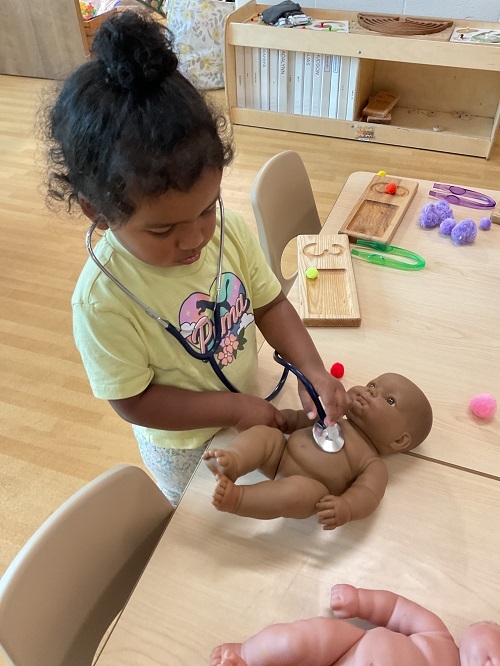
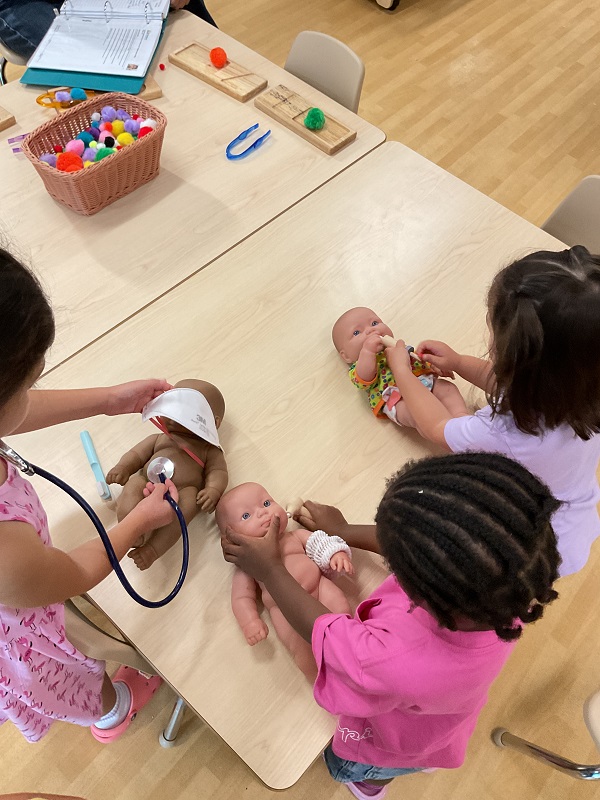
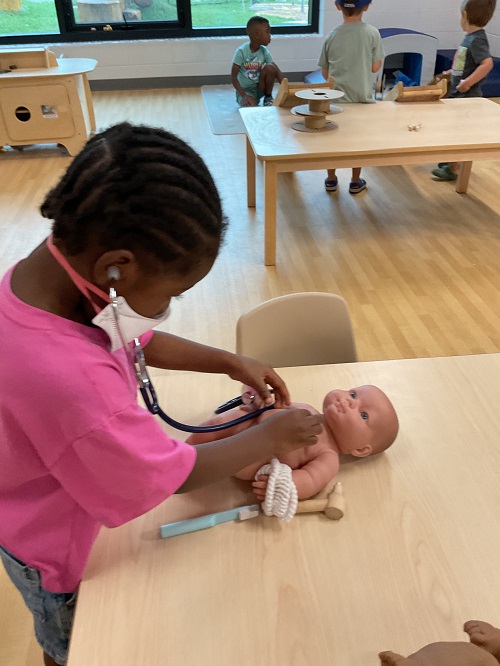
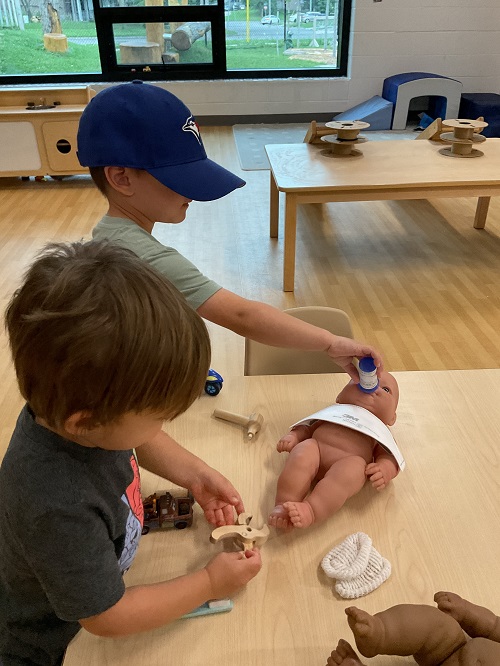
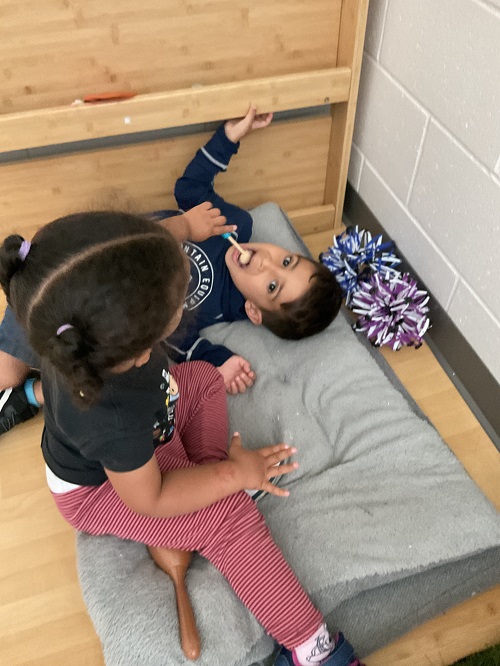
Now this was all about emotional wellbeing. So, to learn about Physical wellbeing children opened a dental clinic in the classroom and participated in learning about dental hygiene. They pretended to be dentists and had so much exploring the dental tools and teeth set that we have in our dental kit. We had a short discussion on happy tooth and sad tooth. We referred a healthy/strong/clean tooth as a “Happy Tooth” and weak/painful/tooth with cavity as a “Sad Tooth”. Children enjoyed being dentists- looking at each other mouths, checking the teeth set in the toy kit, spotting the Sad Tooth out and replacing it with a Happy Tooth. We extended this activity further by talking about foods and habits that causes “Sad Tooth”.

For this learning opportunity we began by having a large group discussion about various food items and categorized them into healthy and unhealthy food for our teeth and body. We also talked about the importance of brushing our teeth everyday. Then, children were provided with pictures of various foods and were invited to put in the mouth with Happy or Sad Tooth. They came one by one, showed what food picture they got to their friends and decided whether that food will make their teeth happy or sad. We ended our discussion by asking children their favourite healthy food. This activity also encouraged our quiet preschoolers to stand in front of friends and express their thoughts and perspective about food.

To continue with promoting overall wellbeing, we decided why to have all the physical activity in the playground, let’s bring it inside the walls too. So, our preschool class decided to have some fun by building an indoor obstacle course. We moved some furniture around gathered up- tape, wooden blocks, table and chairs and brainstormed what we can make. The educator put tape on the floor to mark a path for hopping. Then comes the wooden blocks- children decided to play “Floor is Lava” and we placed the blocks for them to walk on the Lava. After that, they had to crawl under the table and circle back to starting point. Overall, it was a fun indoor gross motor and turn taking experience for everyone. Children learnt how to wait in line without overtaking the friends in front of them. Some children were hesitant to step on the blocks with both feet but, they outgrew their fear with some help from the educators and developed confidence to balance and walk on blocks without touching their foot on the floor.

Moreover, to extend this topic we also practised some Yoga with our educator and it was a wonderful experience. Yoga is not only good for the body but also for the mind. They learned how to breathe deeply, stretch their muscles and relax. Doing yoga together also built a sense of teamwork and friendship. The children encouraged each another, laughed and enjoyed every pose. It was a fun way to stay healthy and strong.

In the upcoming months, we will continue to develop more fun ways to work on our overall wellbeing with our preschoolers.

Yoga downard dog

yoga

group of children at the table

observing the calm down wall


This month, the Toddler 2 room at RisingOaks Early Learning | St. Patrick enhanced their skills through stacking a variety of materials.
Program Name: Toddler 2

This Month at RisingOaks Early Learning | St. Patrick, the toddler 2 room has enhanced their skills though play stacking with a variety of materials. Stacking for toddlers is crucial in developing fine motor and dexterity as they pick up, grasp, and precisely place the materials, strengthening hand muscles. It also strengthens cognition and problem solving as toddlers learn about size, shapes, weight, and experimenting with balancing. In toddler 2, the toddlers experimented with balancing stacked boxes, plastic cups, and many different sized magnetic connectors and balls. Florence, Sebastian and Robbie, as they stacked with the boxes, found that as their tower of boxes became higher that their tower became more unstable and fall. Florence continued to place boxes on top of the tower and watch them fall, seeing the cause and effect of balancing the boxes. When using the plastic cups, the children experimented with the size of the cups. The toddlers saw that stacking the cups out of order, caused the cups to fall as they did not sit on the cup below. The toddlers experimented with stacking the cups many different ways, including turning the cups around and stacking them backwards, finding this did not work either. Showing the toddlers we could stack the cups biggest to smallest, the toddlers slowly tried to follow what the educators did stacking the cups little by little. The connectors and balls, were a favourite for the toddlers. They enjoyed the snap of putting connectors together and adding the balls to the top of their towers, before knocking them over. The toddlers continuously stacked and knocked the connectors over, experimenting with height, weight and balancing. To further their exploration, we added a magnetic board to the table for the children to stack on. This helped with stabilizing the base of their stacking and gave the toddlers a solid foundation to stack more connectors on top. This also gave the toddlers an opportunity to used their creativity making different structures with the connectors and balls, including a birthday cake with candles and singing happy birthday with the educators before pretending to blow and knock the connectors over.   

child creating a magnetic scultpure

child at table with magnetic balls and connectors

Child figuring out how magnets work

child building a tower


RisingOaks Early Learning logo

RisingOaks Early Learning Ontario
Administration Office
10 Washburn Drive, Unit 2 Kitchener, ON N2R 1S2
Charitable Registration Number: 137747705RR0001

Telephone: 519.894.0581
Fax: 519.894.6935
E-mail:

Publish the Menu module to "offcanvas" position. Here you can publish other modules as well.
Learn More.