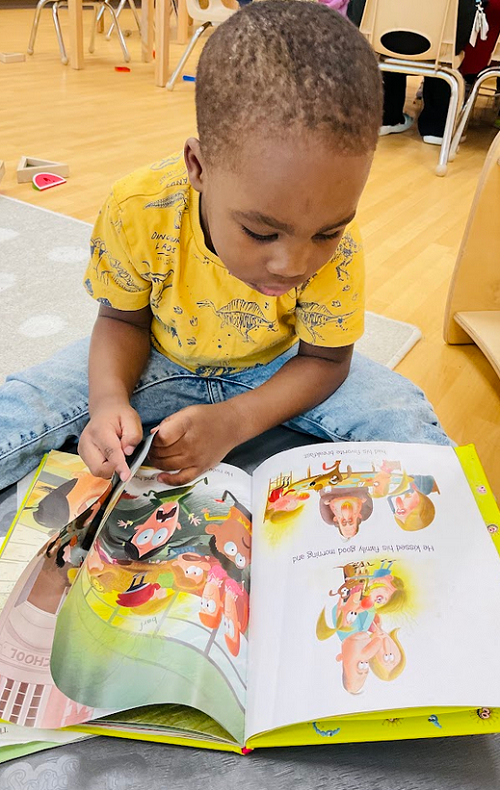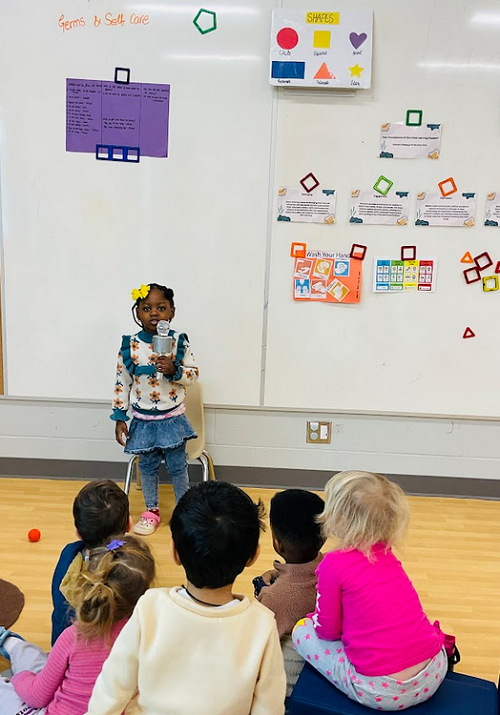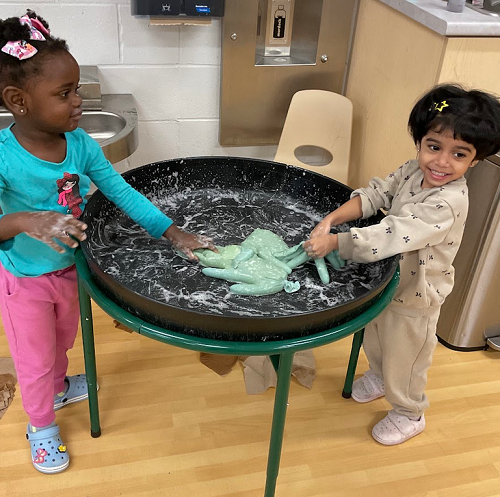
Since December, the Preschool room at RisingOaks Early Learning | St. Patrick, the children showed a strong interest in learning about germs. They especially enjoyed the book “Sick Simon,” through which they were first introduced to the concept of germs and how they can make us sick. When we came back from our holidays, our friends still showed their interest in reading the "Sick Simon" book and learning more about germs. This sparked curiosity and many discussions among the children.
During circle time, the children gathered together to learn more about germs and how we can keep our bodies healthy. We explored this topic through a variety of learning experiences, including books, videos, group discussions, songs, hands-on experiments, and science activities. These experiences helped deepen the children’s understanding of germs, hygiene, and self-care while keeping them engaged and excited to learn.
Snow Science Experiment
After noticing children eating snow outdoors, we discussed whether snow is clean. we did a snow melting experiment. The children predicted what would happen to snow at room temperature. Some thought it would melt, while others thought it would turn into ice. Snow was placed both indoors and outdoors to observe changes. when It melted and we saw the dirt particles in the water, we connected this experiment to learning about germs, discovering that even the clean looking snow can contain the germs. The children learned that eating snow is not healthy.
Learning Through the iPad
Using the iPad, we watched an engaging video that showed what germs are, where they live, and how they affect our bodies. The children learned that germs are so small we need a microscope to see them. We discussed good germs and bad germs. we asked the open- ended questions about what they have learned from the video.
Toviyah said, “Good germs fight with the bad germs.”
Vincent shared, “Bad germs make us sick.”
When asked how to get rid of germs, the children said, “Wash your hands,” and the educator added eating healthy foods. The children practiced handwashing actions and counting to 20. Toviyah confidently sang "wash your hands with soap and water" song and showed how to rub our hands while singing the song. Other children joined by singing handwashing songs, creating a joyful learning environment. Later, Toviyah independently counted to 20 while washing her hands, showing her understanding.
We also discussed healthy foods. The children shared a list of healthy foods such as grapes, bananas, apples, soup, blackberries, chicken, tuna, and vegetables. Cucumbers, peppers were added to the healthy food list during lunchtime.
Learning from the Book: Stop the Germs
We used the book “Stop the Germs” as our learning source. The educator read the book and asked open-ended questions, connecting this learning to a video the children had watched the previous day. The children confidently answered questions about how we wash our hands and how we rub them properly. They learned three different ways to rub their hands and practiced while singing the ABC Song, Happy Birthday, and counting to 20.
Through the book, the children also learned what germs are, where they live, what they look like, how they can make us sick, and how we can see them. The children were very curious and eagerly shared their ideas.
Learned how to cover our mouth while coughing
Afterward, the children practiced covering their mouths when coughing.
Through discussion, songs, and hands-on practice, the children showed growing curiosity and an increasing ability to apply healthy habits in their daily routines.
Steps of handwashing (Picture Cards)
To extend the learning, picture cards showing the steps of handwashing were introduced. In small groups, the children talked about the images and arranged them in the correct order.
Scarlett shared, “First we wash our hands with soap and water.”
Keirra said, “I can make lots of bubbles with my soap.”
Kuaybe excitedly said, “Paper towel!”
The children worked together to glue and sequence the steps, supporting their language, sequencing, social, and fine motor skills.
Hands-On Germ Experiment (Gloves, Sand, Soap, and Water)
The children explored how germs wash away using gloves filled with water and sand representing germs. They observed how germs spread and then washed the gloves with soap and water.
Vincent said, “Lots of germs… if I wash it under water they all gonna go away.”
Nila shared, “Rubbing the germs here,” and noticed bubbles forming.
The children enjoyed the sensory experience, working together, laughing, and exploring textures. Afterward, they washed their own hands and discussed when handwashing is important, such as before eating and after using the bathroom.
we performed one more experiment that was pepper science experiment. using pepper, water, soap. water, the children observed how soap helps remove the germs. when soap was added, the pepper moved away and the children were very surprised to see this. they learned that washing hands with water Is not enough, we really need to use the soap to stop the germs.
Now we are focusing on where do they grow. So, we started a Mold experiment by using two pieces of breads. we placed the untouched bread (clean bread) In a Ziplock bag. we touched other bread with our bare hands and made it wet with water. we placed It In other Ziplock bag. we are gong to observe these breads, we will see what is going to happen to our breads. while performing this experiment, we read the "STOP THE GERMS BOOK" and we noticed how the germs looks like. we saw the green colour of germs in the books. After placing the breads in the Ziplock bags, the educator asked the children what do you think, what is going to happen to the breads? some of our friends shared their thoughts on this experiment. Charlie and Scarlett shared that "the bread's gonna turn green". Vincent said, "there will be germs". Nikola said, "The germs are gonna grow", whereas Nila and Noah said, green germs.
Through all of these experiences, they have improved their communication skills, sensory- motor skills, social skills and cognitive skills, while learning how to make healthy choices and care for their bodies in every day life.