This month, our preschool classroom at RisingOaks Early Learning | St. Patrick embarked on an exciting learning journey focused on understanding germs and how to stop their spread. The children’s curiosity was sparked while reading the book “Stop the Germs”, which opened the door to meaningful conversations and deeper exploration. As we read together, the children learned that germs are incredibly small and cannot be seen with our eyes—we need a microscope to observe them. This discovery led to rich discussions about good and bad germs, helping children understand that while some bacteria help keep our bodies healthy, others can make us sick.
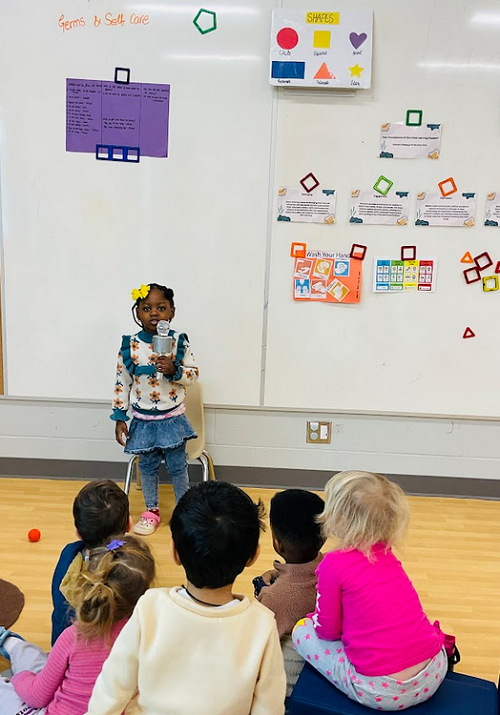
Through group conversations and shared experiences, children began building cognitive and language skills by asking thoughtful questions, sharing ideas, and making connections to their own lives. We also discussed the importance of handwashing, healthy food choices, and physical activity as ways to keep our bodies strong and healthy.
To support learning through hands-on experiences, we planned a variety of engaging activities that encouraged children to explore, experiment, and practice important life skills.
One such activity focused on learning how to blow our noses properly. Using paper rolls and pom-poms, children practiced deep breathing through their noses and then exhaling to make the pom-poms jump out of the rolls. With repeated attempts, children gained confidence and control over their breathing. This activity supported physical development, particularly breath control and coordination, while also building self-help and social-emotional skills as children learned to care for their bodies and respond to their needs.
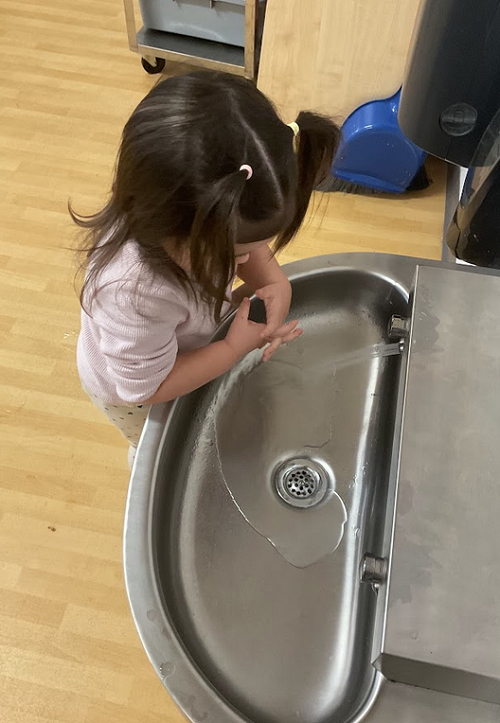
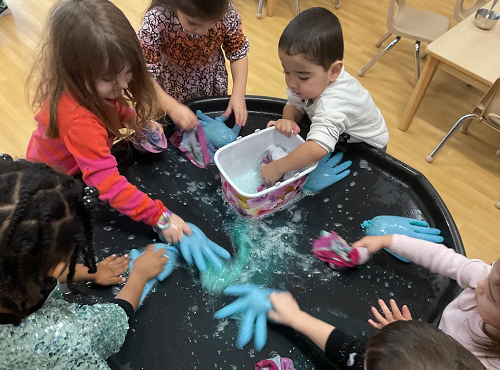
Hand hygiene was another key focus of our learning. To make handwashing fun and meaningful, children participated in a sensory activity using vinyl gloves filled with water to represent hands. Green paint was added to symbolize germs. With soapy water and washcloths, children eagerly worked to clean the “hands,” carefully washing between fingers, on the backs of hands, thumbs, palms, wrists, and under fingernails. This experience supported fine motor development, sensory exploration, and cognitive understanding of sequencing and cause-and-effect. Following the activity, children practiced handwashing at the sink with the educator, demonstrating increased independence, patience, and attention to each step of the process.
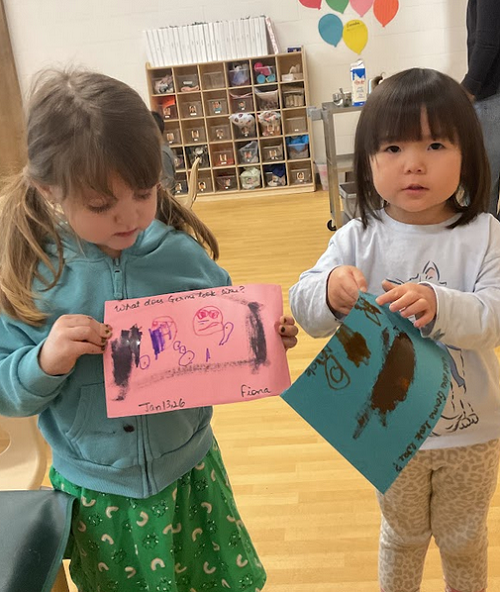
As our learning continued, children began wondering: If germs are so small that we cannot see them, what do they look like? How do they spread? These questions led to an open-ended exploration that encouraged children to share their perspectives first. Using construction paper, art materials, and homemade playdough, children expressed their ideas by drawing and creating three-dimensional germ models. They were invited to enhance their creations with provocations such as googly eyes, Q-tips, straws, pipe cleaners, and glitter. This activity supported creative expression, problem-solving, and fine motor skills, while also strengthening confidence and communication as children explained their creations to peers and educators.
To understand, how germs spread / move from one area to another? We represented glitter as our germs and placed them on their hands. Then, the educator asked children to continue their daily activities and play. After 15-20 minutes we noticed how the glitter (germs) spread and got transferred on the surface of a table, toys, carpet, their faces, hair and wherever they were touching. We also did handshakes and high fives with one person with clean hands another with germs on the hands. The children observed how the germs (glitter) got attached on the clean hands. This activity encouraged thinking and reaching conclusion, while also supporting their curiosities about the world around us.
To deepen our understanding, we explored a simple science experiment to answer an important question: Why do we need soap to wash our hands? A bowl of water, black pepper to represent germs, and soap were used. When children touched the “germs” without soap, nothing happened. However, when a soapy finger touched the water, the pepper quickly moved away. The children were amazed by this reaction, which helped them understand that germs do not like soap. This experiment encouraged scientific thinking, observation, and cause-and-effect reasoning, while also supporting curiosity and engagement.
To further extend this learning and strengthen connections with our community, we will be inviting a special guest into our classroom to share their knowledge and experiences related to health and hygiene. This will provide children with an opportunity to connect classroom learning to the world around them and deepen their understanding through real-life experiences.