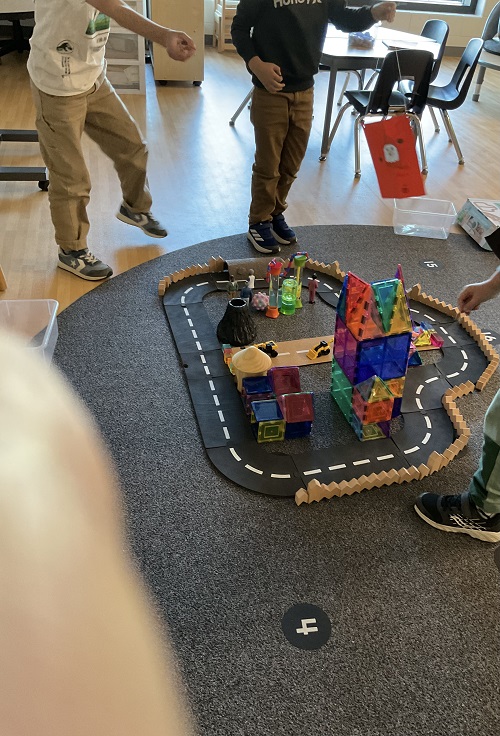


The School-age 2 children at RisingOaks Early Learning | St. Patrick have shown a strong and ongoing interest in building and creating structures, roads, and forts since the start of the school year. They have experimented with a variety of materials wood, cardboard, and plastic pieces and enjoyed using figurines and craft supplies to bring their creations to life.
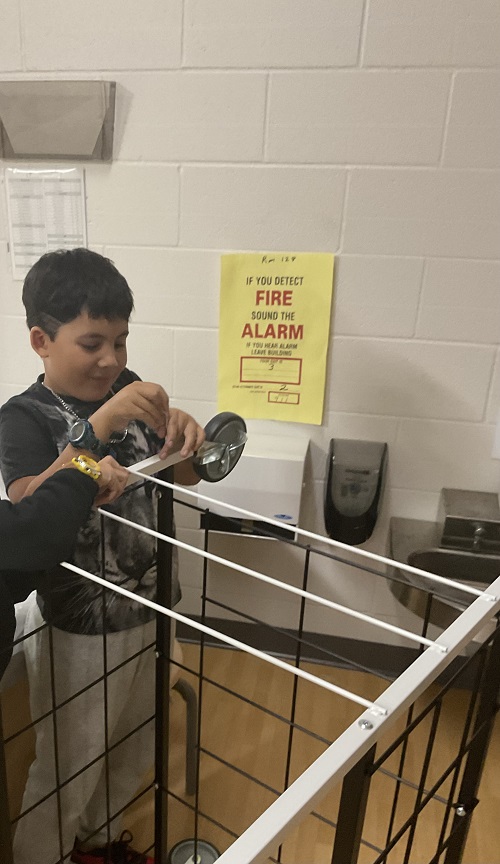
To extend this interest, we introduced real-world building materials such as hand tools, an outdoor toy cart, screws, washers, and bolts. We also added new LEGO build sets and large cardboard boxes, supporting the children as they explored different ideas, shapes, textures, weights, and sizes.
Some children chose to design buildings and roadways before school, using fine-motor skills and creativity to sketch and construct their ideas. As they worked together, each child contributed different materials, toys, and perspectives, collaborating to create sustainable and stable structures. They engaged in meaningful problem-solving conversations, such as noticing, “If we add a heavy brick on top of the wood pieces, it might break the whole structure.”
A highlight of the week was when a small group built an outdoor cart completely from scratch using real tools. They read instructions, interpreted diagrams, and determined how each piece fit together. I supported them throughout the process, and they demonstrated impressive teamwork, persistence, and problem-solving skills.
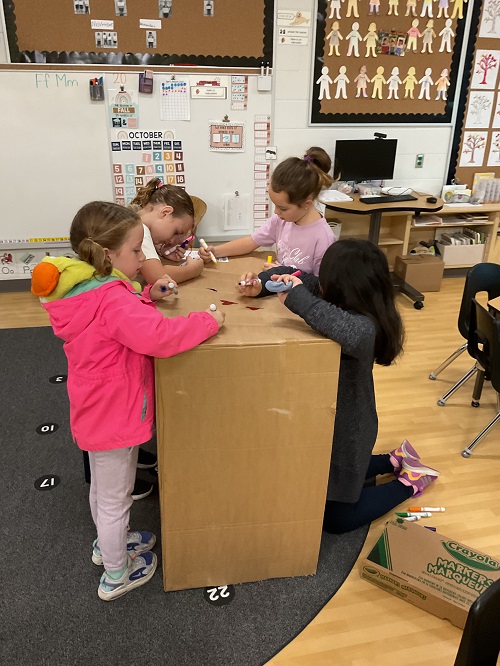
We also spent a week building large structures from cardboard boxes. The children used tape, additional cardboard pieces, markers, and stickers to customize their designs. What began as a friendly competition between two teams each wanting to “outdo” the other evolved into a collaborative celebration of creativity. By the end, the children proudly shared and admired both unique forts, complimenting the ideas and designs of their peers.
These process-based building experiences promote fine-motor development, critical and creative thinking, collaboration, resilience, and rich conversations with both peers and educators. Most importantly, they support confidence-building and empower school-age children to explore their ideas with pride and curiosity.