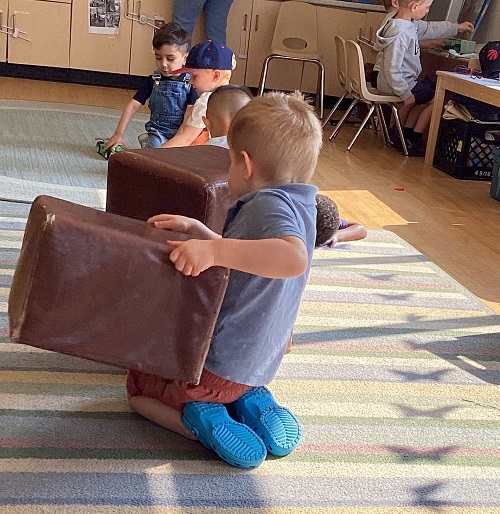


We observed the children engaging enthusiastically in gross motor activities, we recognized the need for a larger and more inviting space for movement. In response, we reorganized the classroom by dividing the group into two clusters and allocating a larger portion of the room to gross motor play. We introduced stepping stones, climbers, and other physical challenges to support their growing physical needs. It was wonderful to witness their excitement and energy as they explored this new setup. Simultaneously, we ensured that quieter areas remained available—sensory activities were placed to the side, while children preferring calm engagement were invited to a designated back area of the room.
As the children’s interests evolved, we noticed a growing fascination with construction and dramatic play. In response, we restructured the space again, creating more small, clearly defined play areas to encourage cognitive and constructive activities. These spaces allowed children to explore, interact in small groups, and engage more deeply with a variety of materials. As a result, we observed the formation of familiar peer groups, collaborating and connecting socially within shared areas of interest. These interactions fostered strong friendships and deeper engagement.
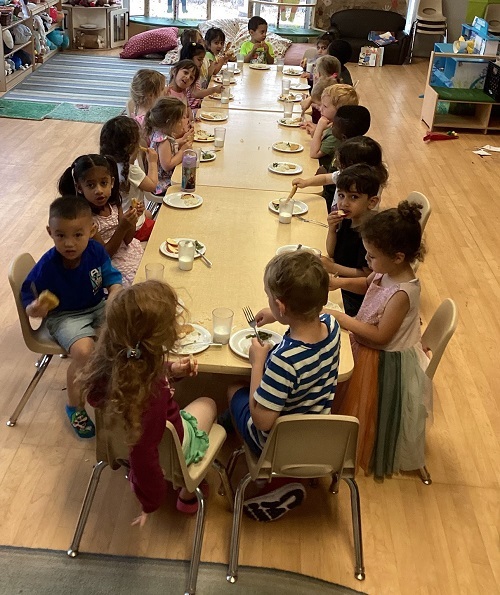
Since the fall, one of the characters that captured the children's interest during dramatic play was Bluey. As educators, we were in the early stages of setting up a provocation inspired by this interest. When we had the opportunity to visit Mini Play-town it sparked inspiration in both children and educators alike. During our time there, we were generously gifted an animal veterinary station, which further ignited the children’s curiosity and imagination. Combining their enthusiasm for Bluey with the new veterinary materials, we introduced a Bluey-themed dramatic play area. Thanks to the thoughtful donation of Bluey-themed decorations from one of our families, the classroom was transformed into a vibrant, engaging space that reflected the children's current interest. The veterinary setup quickly became a hub of activity. Children eagerly cared for their “pets” using stethoscopes, bandages, string, and various props, demonstrating empathy, collaboration, and problem-solving skills. Their engagement ran deep—many extended their interest into other parts of the day by requesting Bluey-themed yoga, which we were happy to incorporate into our daily routine. Later, as interest in the gross motor area waned, we re imagined the space once again. We connected three tables to create a large communal area for tabletop activities. Children were encouraged to choose from transient art, and loose parts. In addition, teacher-led materials gave us more communal and intimacy in the room. It also gave the children greater autonomy to select and switch activities at will. This increased independence was evident in their confident exploration and engagement. Remarkably, during mealtimes, the area transformed into a restaurant-like setting where all children could sit together in a long row. This arrangement created a sense of community and provided opportunities for practicing table manners and using “magic words” such as “please” and “thank you.” This small shift had a big impact, making mealtimes feel special and intentional.
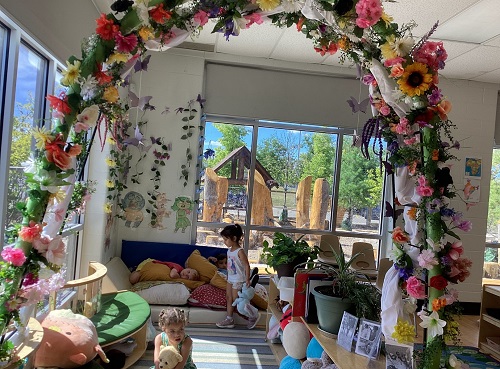
We also noticed many children becoming emotionally attached to their stuffed animals, or “stuffies.” In response, we created a cozy, home-like reading book ornamented with a floral arch, soft pillows, and a bed-like space. This area became a comforting retreat where children could relax with their stuffies, read books, and engage socially with peers in a nurturing and calming environment.
Throughout the summer, we observed the children growing in confidence and seeking new challenges—a clear sign that they were feeling more capable and independent. By continuously adapting the classroom environment based on the children's evolving interests and developmental stages, we cultivated a calm, engaging space where children could explore and learn with minimal guidance. These intentional changes not only supported their cognitive and physical development but also nurtured their emotional well-being and social skills.