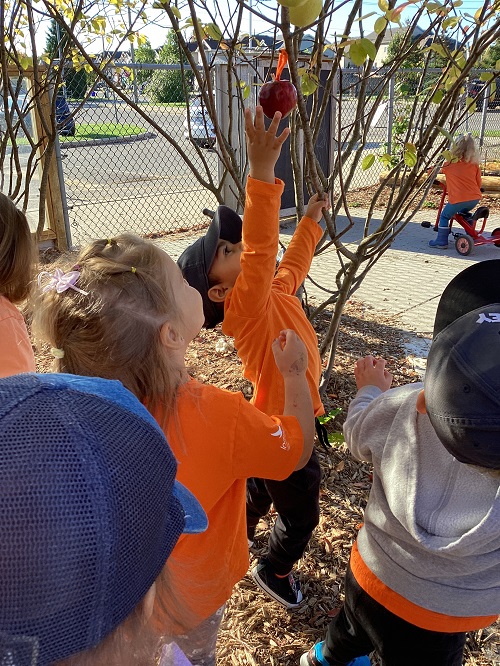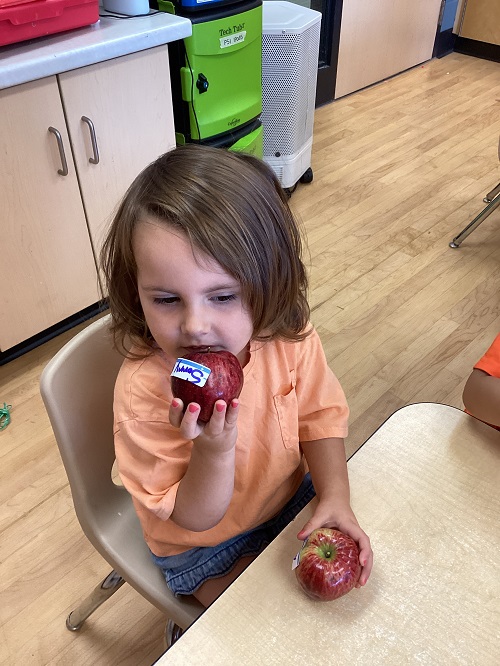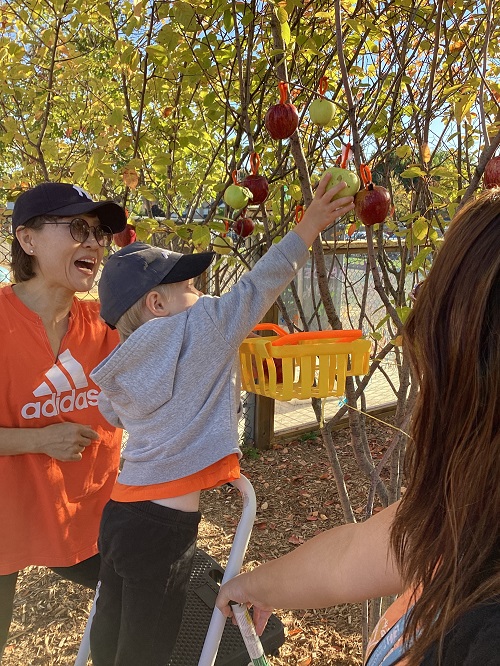


This learning story began with a spontaneous moment that grew into a meaningful multicultural and reconciliation experience in Preschool 2 at RisingOaks Early Learning | John Sweeney. One day, while educator Hope was using a ladder, the children became curious and excited, expressing a strong desire to try it themselves. Recognizing their interest, the educator safely positioned the ladder beside a window and added a playful twist; she drew an apple tree on the window, inspired by a recent learning topic the children had enjoyed. The children eagerly took turns climbing the ladder with a basket, pretending to pick apples from the tree. They used their gross motor skills to climb and their fine motor skills to gently "pick" the apples. It was a joyful and focused experience, filled with laughter and imagination. Their active engagement and enthusiasm sparked a new idea, connecting to Truth and Reconciliation Day, and an opportunity to learn about another culture's way of expressing apology. In Korean, the word "sagwa" means both apple and apology. Inspired by this, we planned a special activity using apples to explore the theme of apology, empathy, and respect. Educator Hope brought real apples picked up from her garden and, with care, we created apple trees in our outdoor play space by hanging the apples on branches. When the children discovered the surprise in the playground, they were thrilled. Hunter exclaimed, “Wow! Did you make apple trees?” and Liliana eagerly said, “I want green apple!” Ilija spotted an apple, stretched out his arm, picked it, took a big bite, and beamed with a happy face. The children joyfully climbed the ladder as they practised the other day in the classroom and picked up the apples, expecting another delicious play. After returning indoors, we gathered together to talk about Truth and Reconciliation Day; what it means to say sorry, and why it is important to understand and respect different cultures. We introduced the Korean word "sagwa", explaining how it represents both an apple and an apology. The children listened closely and repeated the word after educator Hope. We talked about how words and actions can help us express our care for others, especially when someone has been hurt or treated unfairly. Each child was invited to choose an apple and place a sticker on it that said something kind or apologetic, such as “Sorry your orange t-shirt was taken”, or “Sorry you were sad”. This gentle activity opened up conversations about saying sorry, being kind, and understanding how others feel. It was a meaningful step in building empathy and creating a culture of respect and inclusion. After these experiences, we happily enjoyed the organic apples; practising patience as we waited, expressing how they tasted, and sharing them with friends. Through this child-led and culturally rich experience, we were able to connect everyday play with deeper themes of reconciliation, care, and understanding. We believe that fostering these values in early childhood helps plant the seeds for a future where all cultures; especially Indigenous cultures and rights; are recognized, valued, and protected. This experience reminded us that learning about truth and reconciliation can begin with small, heartfelt steps. Preschool 2 children who learned these empathy, respect, and kindness will grow into thoughtful individuals who contribute to a more just and inclusive world.