Over the past week, the School Age 2 group embarked on an exciting journey into space exploration, sparked by a meaningful real-world connection. During a group discussion, one child shared that they had recently seen a rocket launch on the news while watching with their parents. This moment ignited curiosity across the group, leading to questions, excitement, and a shared interest in learning more about space. From the beginning, children demonstrated a strong sense of belonging as they gathered together to share their ideas, listen to one another, and build on each other’s thinking. Through these conversations, they felt valued as contributors within the group, creating a learning environment rooted in inclusion and respect.
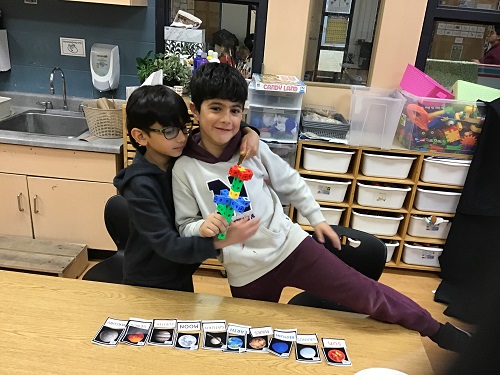
Our exploration began with a discussion about planets, where children were introduced to the differences between solid and gas planets. Through open-ended questioning, they confidently shared their prior knowledge and theories. One child explained, “Gas planets are like air—you can’t stand on them!” while another added, “Solid planets have rocks like Earth.” Their willingness to take risks in sharing ideas reflected a growing sense of well-being, as children felt safe, capable, and supported in expressing their thoughts.
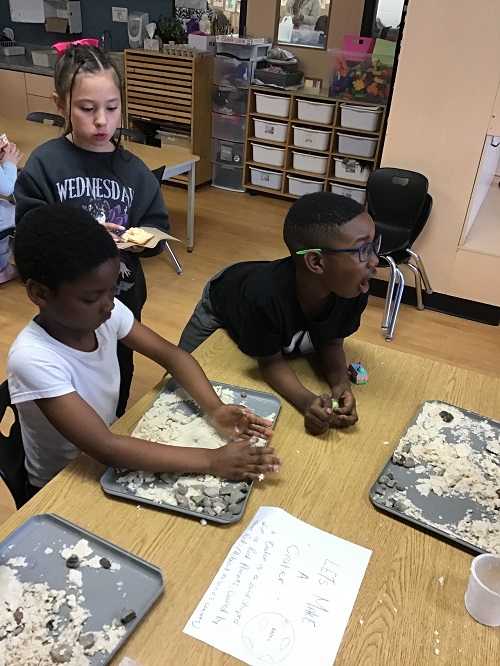
To extend this learning, children engaged in a sensory activity where they created moon craters using sand and rocks. As they dropped rocks into the sand, they observed the impact and excitedly compared crater sizes. The group remained deeply engaged, demonstrating curiosity, focus, and persistence as they experimented with different sizes and heights. This hands-on experience supported their understanding of cause and effect while encouraging inquiry-based learning through exploration and discovery.
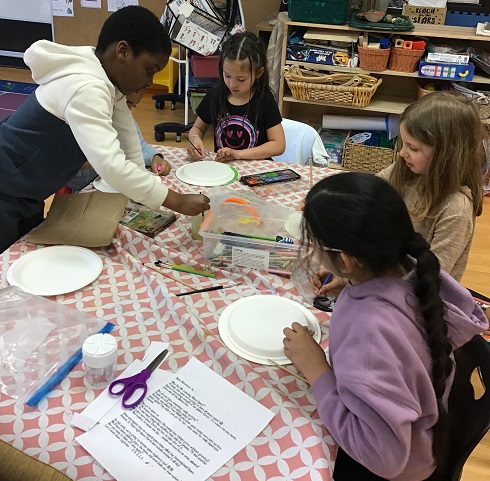
The children also explored the concept of gas planets through a creative art experience using shaving cream and paint. As they mixed and swirled materials, they created their own interpretations of gaseous planets. This process provided opportunities for expression, as children used visual art and sensory materials to represent their understanding in unique and meaningful ways.
As our inquiry deepened, we shifted our focus to astronauts and space travel. During a group discussion, the children were asked, “Do you think astronauts can breathe in space?”
They responded with thoughtful ideas such as, “No, the air is not like ours,” and “They need helmets to breathe.” These conversations highlighted not only their developing scientific understanding, but also their ability to communicate ideas clearly and confidently, strengthening both expression and a sense of belonging within the group dialogue.
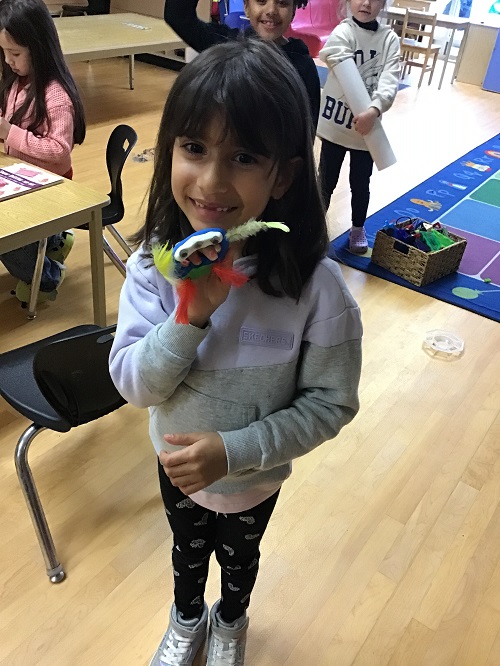
Building on this knowledge, children created their own astronaut helmets, making connections between safety equipment and survival in space. As they engaged in imaginative role-play, they demonstrated creativity and confidence, further supporting their well-being as they explored new ideas in a safe and playful context.
Throughout the week, children also engaged in moon sand exploration, using tools, hands, and creative thinking to shape and build. Their sustained focus and excitement reflected ongoing engagement, while collaborative play experiences continued to strengthen relationships and a shared sense of community.