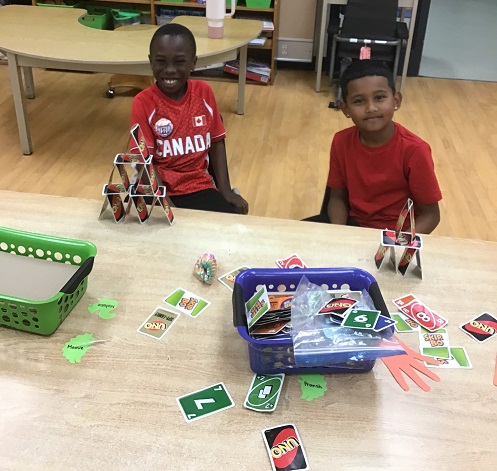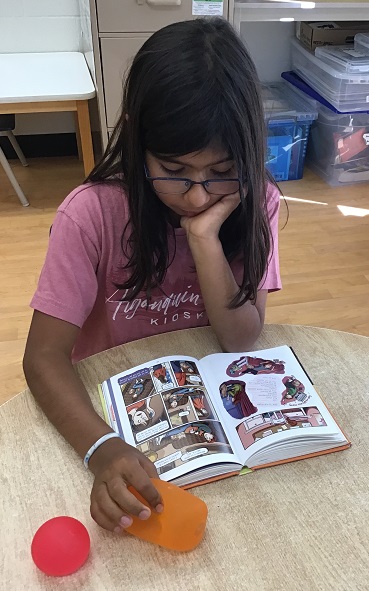
In School-Age 3, we have been exploring an important question: How can we help our bodies and minds settle after the excitement of outdoor play? When coming inside it can be hard to remember that in our small classroom we cannot play the same as we play outside. When we are outside we can be loud without hurting our friends’ ears and we can run/ chase each other safely. With approximately 15–20 children in our class, the transition from outside to inside has become an opportunity to learn more about ourselves, discover our individual needs, and explore different ways to practise self-regulation. Referring to HDLH we prioritize expression, belonging, engagement and well-being in our classroom which has been an important focus when finding our calm.
Our journey began with the introduction of journaling as a quiet activity when returning indoors. This strategy worked really well, providing the children with a consistent and calming way to transition into the classroom. As the weeks went on, however, some children avoided journaling and expressed their journal felt like a chore. Some friends began asking if they could read a library book or work on their homework instead of writing in their journals. These questions opened up a meaningful conversation about how we all find different things help with self regulation. We began to recognize that while one strategy might work well for one person, another person may need something completely different.
From there, we started experimenting with a variety of activities and materials to discover what helped us feel settled and ready for indoor play. We introduced fidget and squishy toys, reading, puzzles, board games, and crafts. The children explored these options with curiosity, testing out different activities and noticing what felt good for them. We began to see that calming our bodies does not necessarily mean sitting still or doing nothing. Sometimes, our brains enjoy having something interesting to focus on while our bodies slow down.
One area of particular interest has been fidget toys and mind puzzles. The children have enjoyed exploring optical illusions and challenging themselves to find hidden pictures in the Eye Magic images. These activities have encouraged concentration, curiosity, and problem-solving while offering a quieter alternative to the high-energy play that happens outdoors. The excitement of discovering a hidden image often brings opportunities for children to share their observations, compare what they see, and encourage one another.
Through this ongoing exploration, the children are developing a deeper understanding of self-regulation and the importance of recognizing their own needs. They are learning that there is no single strategy that works for everyone, and that having choices allows us to become more independent in finding what helps us feel calm, comfortable, and ready to learn. They are also practising self-awareness by noticing which activities help them transition between different parts of their day.
We will continue offering a variety of calming activities and inviting the children to reflect on what works best for them. We hope to create a collection of strategies that the children can independently choose from when coming inside, helping them build confidence in recognizing their feelings and making choices that support their well-being. As we continue this journey, we will encourage the children to remain curious about themselves and one another, remembering that we all ha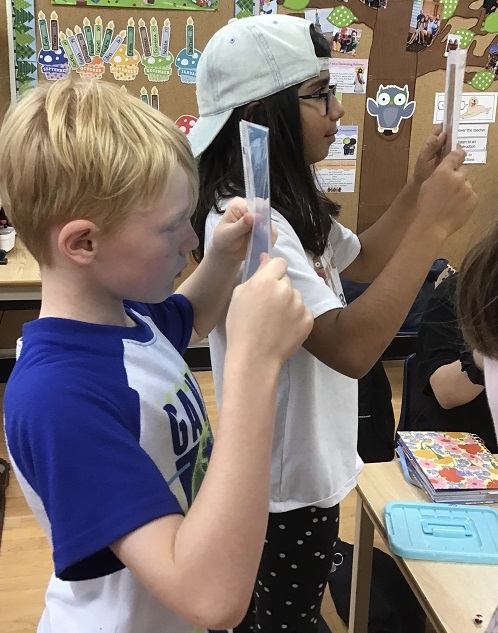 ve different ways of finding our calm.