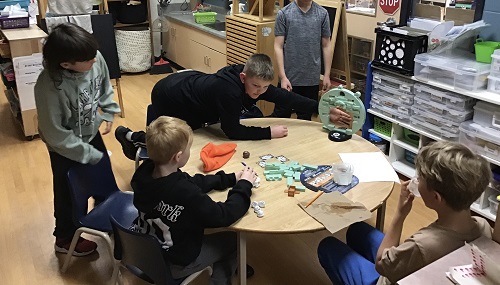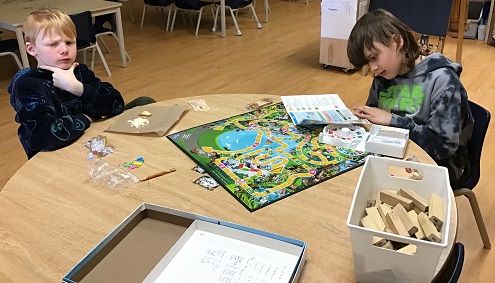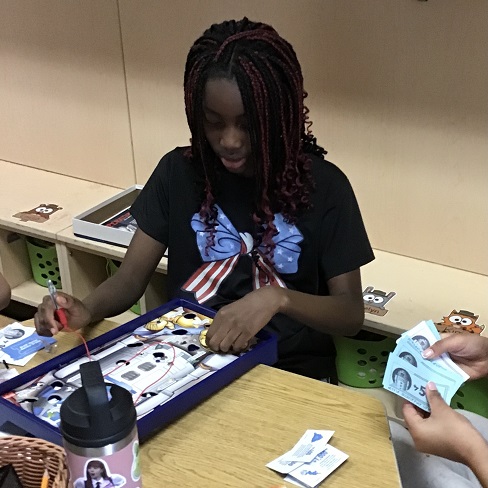
In School Age 3 we recently received some new board games. The group showed excitement as they explored different board games, including Life, Chess, Angry Birds Jenga, and Star Wars Operation. Through observation, it was evident that these activities created opportunities for social interaction, cooperation, and problem-solving.
One group began playing Life, the children worked together to review the rules and organize the game pieces. Some children explained the instructions to others, demonstrating leadership and collaboration. Throughout the game, the players practiced turn-taking and communicated with one another about their progress on the board and the reasons for their choices on families and career. They asked questions, shared strategies, and celebrated each other’s turns. These interactions supported a sense of belonging within the group, as the children showed patience and respect while helping peers understand different parts of the game.
Another group of friends played Angry Birds Jenga, which introduced a different type of challenge. The children carefully built the tower and discussed how the game worked compared to regular Jenga. They took turns on who got to use which catapult and which places to aim for. Rona and Christine noticed there to be less arguing in this group compared to when they play other games together. Possibly the goal is achieved by working together instead of competing which showed the children’s abilities to work together and communicate effectively which allowed them to compromise and play fair.
Star Wars Operation, seemed to be played more independently. A few children would sit at a table together and chat while each peer did their own activity. Some friends would draw or craft or build with magnets while the one friend played operation solo.
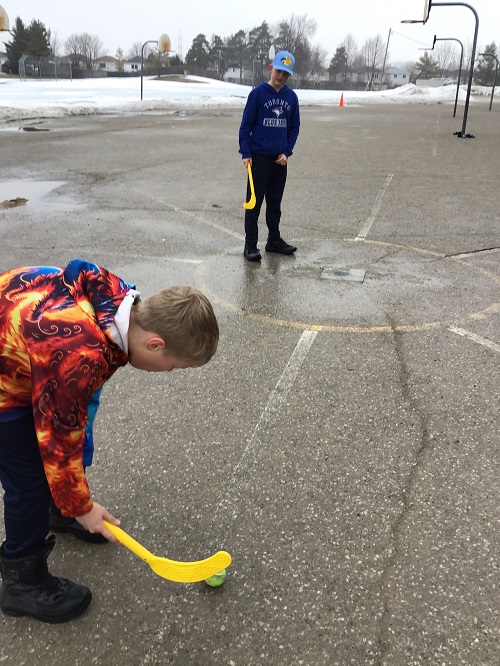
Earlier in the winter after a big snow fall a plow knocked over the blue basketball bucket. Now that the snow is melting the hole that was left is visible. Jordan and his friend took two mini sticks and a tennis ball and used the hole as a mini golf target. They took turns aiming their shots and discussed how they could improve their aim to guide the ball into the hole.
Overall, the organized games in school age 3 supported the development of teamwork, cooperation, and communication skills. The board games encouraged the School Age 3 children to work together, practice patience, and support one another. At the same time, the creative mini-golf experience demonstrated how the children used imagination and collaboration to transform their environment into new learning opportunities. Through these shared play experiences, the group strengthened their social connections while developing important communication and problem-solving skills in a supportive after-school environment.