During our playdough activity, the Preschool 2 children at RisingOaks Early Learning | John Sweeney showed a strong interest in creating pizzas. They used playdough as the pizza base and beads as toppings, carefully placing them and talking about what kind of pizza they were making. This interest quickly turned into imaginative play, rich with conversation, creativity, and collaboration.
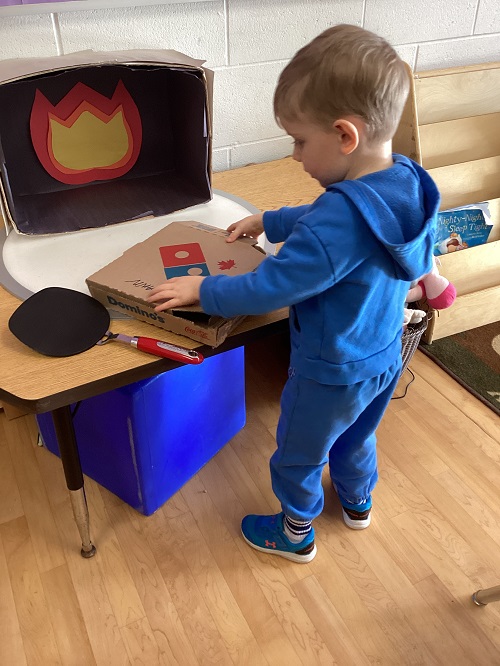
To support and extend this interest, we created a pizza station in the classroom. We added real pizza boxes, kitchen utensils, trays, and props to make the experience as realistic as possible. The children eagerly took on different roles, pretending to be pizza makers, cooks, and delivery drivers. They put on aprons and gloves, and worked together to prepare pizzas, deciding what toppings to use and how to assemble them. Once ready, they carried the pizzas to the “oven,” which was made from large cardboard boxes. While placing their pizzas into the oven made from boxes, the children shared their excitement and understanding of the process:
Austeja said, “We have to put it in the oven so it can cook. It’s not ready yet.”
Isla added, “Careful, it’s hot! My pizza needs more time.”
These comments show the children’s growing understanding of sequencing, safety, and real-life cooking processes, as well as their ability to express ideas and negotiate meaning during play.
Throughout this experience, the children demonstrated strong teamwork skills. They negotiated roles, shared materials, waited for turns, and helped one another complete their pizzas. Their language skills were supported as they engaged in conversations about their creations, explained their ideas, and used new vocabulary related to food and cooking.
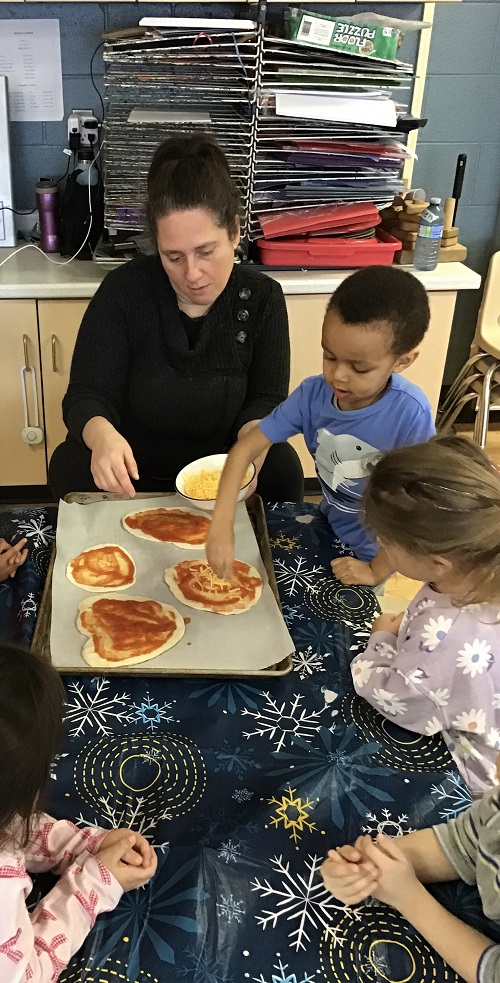
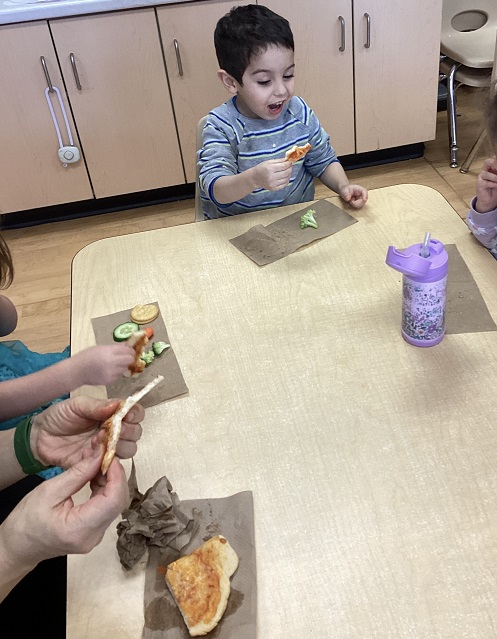
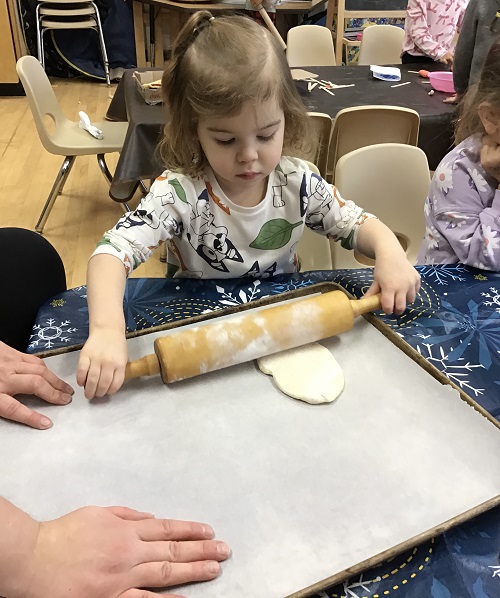
To make the learning even more meaningful, we later recreated the experience with real food. Together, we made pizzas in the classroom. The children observed the full process—from preparing the dough to adding sauce and choosing toppings. They were actively involved and excited to see how the pretend play connected to real life. At the end, the children enjoyed eating the pizzas they had helped create. The experience was a big success, and everyone participated enthusiastically, many children even asked for more!
What the Children Learned:
- Collaboration and teamwork
- Role-play and social skills
- Language development and new vocabulary
- Fine motor skills through manipulating dough and toppings
- Understanding real-life processes through hands-on experience