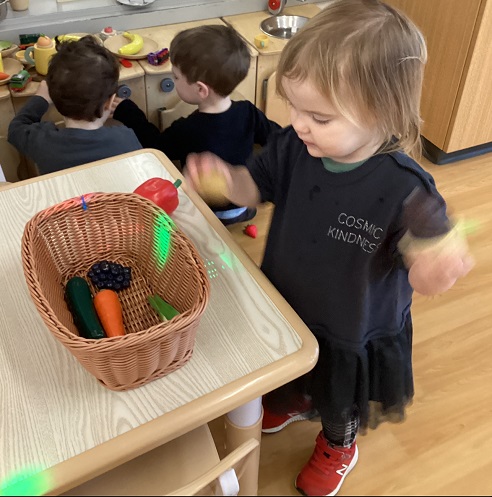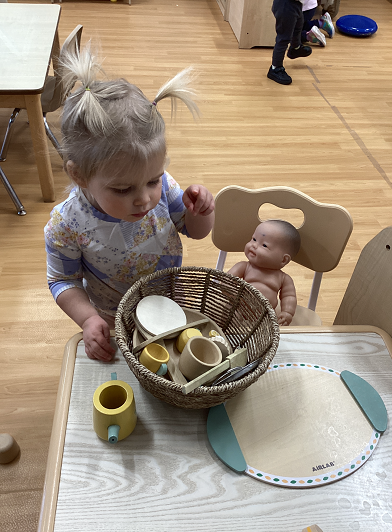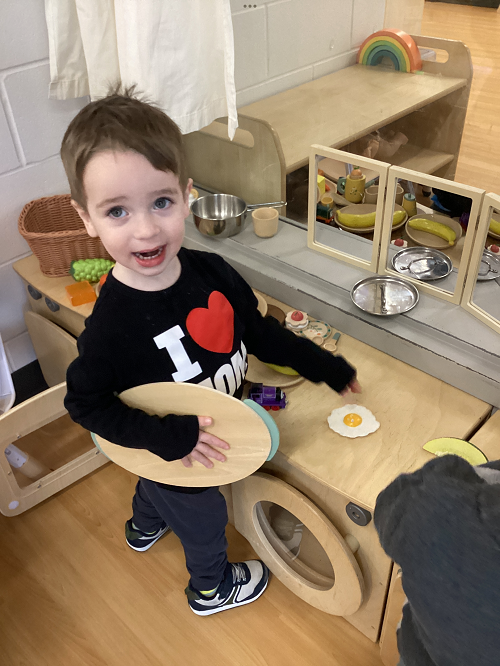
Over the past couple of weeks, the children have shown a strong and sustained interest in the kitchen area of the classroom. This space has become a central hub for imaginative play, collaboration, and rich learning experiences. Through pretend cooking, hosting tea parties, and caring for their baby dolls, the children are deeply engaged in meaningful social and cognitive play.
As the children prepare meals for themselves and their peers, they confidently name foods, describe what they are cooking, and share their materials with one another. Tables are carefully set with “food,” and tea parties are thoughtfully organized, allowing children to explore creativity and practice familiar routines from their everyday lives. Many children have also been observed bringing baby dolls into the kitchen to feed them, demonstrating empathy, nurturing behaviors, and an awareness of caring roles.
This dramatic play has significantly supported the children’s language and communication development. Children are engaging in back-and-forth conversations, expanding their vocabulary, and practicing expressive language as they play roles, share materials, and explain their creations. Educators have been actively involved in the play—listening, modeling new language, asking open-ended questions, and extending conversations to deepen thinking and learning.
By following the children’s interests and supporting their play with intentional interactions, educators are creating a rich learning environment where children feel valued, capable, and inspired. The kitchen area continues to be a meaningful space where learning unfolds naturally through play, connection, and imagination. Wonder what the toddlers will be up to next month, Happy January from Toddler 2!