Over the past few weeks, educators have been reflecting on the dynamics within our School Age 2 community. We noticed that some children were experiencing challenges with inclusion—at times excluding peers from play, using unkind language, and finding it difficult to collaborate.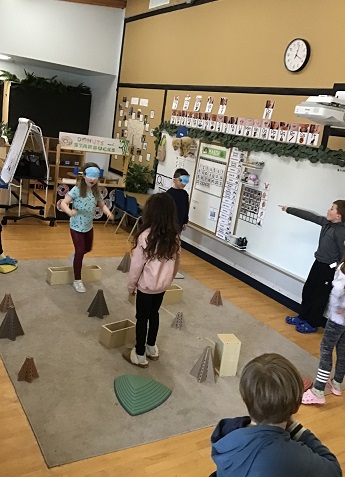
Guided by How Does Learning Happen?, we recognized this as an opportunity to support the children in strengthening their sense of belonging, well-being, engagement, and expression. With this in mind, educators intentionally planned a series of team-building experiences designed to nurture relationships, encourage collaboration, and foster a more inclusive classroom community.
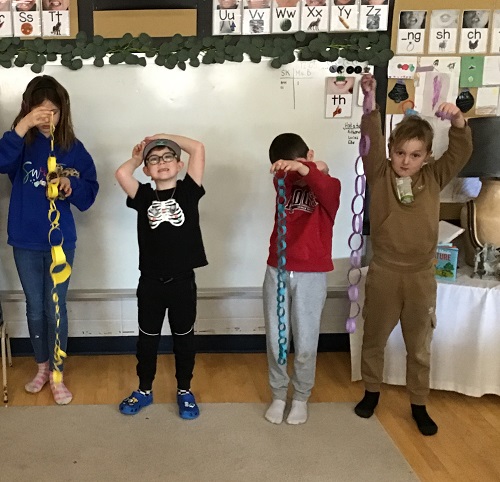 Our journey began with a Paper Chain Challenge, where children worked in small groups to create the longest chain possible. Through trial and error, they began to share ideas, listen to one another, and problem-solve together. As engagement grew, so did their confidence—children advocated for more time, refined their strategies, and celebrated one another’s efforts. This experience highlighted the importance of cooperation, communication, and valuing each member’s contribution.
The following day, the children eagerly anticipated the next challenge: The Minefield Challenge. Working in pairs, one child guided a blindfolded partner through an obstacle course using only verbal directions. This experience fostered trust, clear communication, and perspective-taking. As children switched roles and partners, they demonstrated flexibility and a growing ability to connect with different peers.
Educators continued to offer collaborative invitations that encouraged children to work together in meaningful ways. Whether guiding a marker through a maze using strings, maneuvering a ball into numbered cups, or recreating patterns with a partner, children practiced patience, turn-taking, and shared decision-making.
During these experiences, we observed moments of hesitation when competition was introduced. However, these moments became opportunities for growth. Children began supporting one another—offering encouragement, reassurance, and reminders that effort matters more than outcome. A strong sense of empathy and peer support began to emerge.
As we reflected on children’s responses to competition, we introduced structured opportunities to explore it in a positive way. During a game of tug of war, children collaborated to create fair teams, considering strength, size, and age. They engaged in thoughtful discussions about safety, fairness, and respect.
When the children suggested a “girls vs. boys” round, the outcome challenged assumptions and opened space for meaningful reflection on teamwork and equity. Throughout the game, children focused less on winning and more on encouraging one another, demonstrating resilience, sportsmanship, and joy in shared experiences.
Similarly, during an independent relay challenge, children initially experienced frustration. However, the dynamic quickly shifted—peers began walking alongside one another, offering support and encouragement. When one child successfully completed the challenge after many attempts, the group erupted in celebration, reinforcing the value of perseverance and community.
In whole-group activities such as the Hula Hoop Challenge and Human Knot, children worked together toward a common goal. These experiences required communication, patience, and flexibility. Notably, when challenges arose, children responded with understanding and chose to try again together, demonstrating empathy and a deepened sense of connection.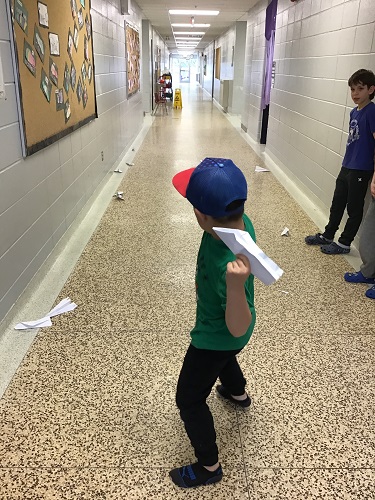
As a final experience, children participated in a paper airplane challenge, designing and testing their own creations. This activity was rich in collaboration, as children supported one another in folding and refining their designs.
When it came time to test their airplanes, the hallway was filled with e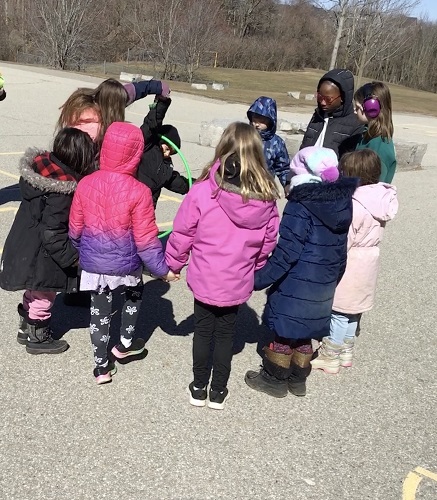 xcitement, cheering, and celebration. What stood out most was not the distance flown, but the encouragement shared. Every child was uplifted, and each success—big or small—was celebrated as a group.
Throughout these experiences, we observed a meaningful shift within our classroom community, closely aligned with the four foundations of How Does Learning Happen?:
- Belonging: Children began to include one another more intentionally, celebrate successes, and build stronger relationships. A true sense of community emerged.
- Well-Being: Confidence, resilience, and emotional awareness grew as children learned to navigate challenges and support one another.
- Engagement: Children remained deeply involved, motivated, and eager to participate, often extending and revisiting activities.
- Expression: Through communication, problem-solving, and collaboration, children expressed their ideas, feelings, and perspectives in meaningful ways.
As a natural extension of this growth, a powerful moment unfolded during our time in the forest. A group of children worked together to gather logs and materials, collaborating to create their own seesaw.
This child-led experience reflected everything we had been nurturing—teamwork, communication, problem-solving, and shared vision. The children negotiated ideas, tested their structure, and adapted their approach together. Most importantly, they demonstrated a deep sense of connection and belonging.
These experiences have supported the development of a classroom community grounded in inclusion, cooperation, and mutual respect. Through intentional team-building opportunities, children have come to understand that they are stronger together.
Our classroom continues to grow as a space where every child feels valued, supported, and a true sense of belonging—where they lift one another up, work together, and celebrate the journey as a community.
Stay tuned for next month where we discuss the children’s journey with nature.