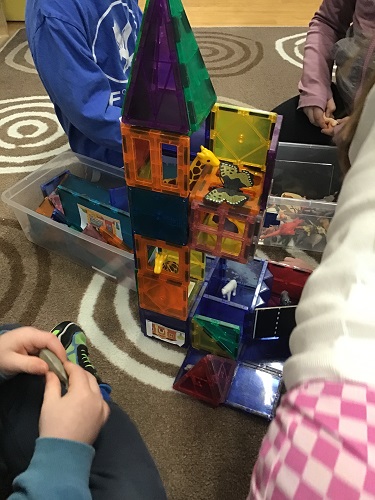
 One day during free play, we observed that Chloe B and Calen took some magnetic tiles and a few animal figures. They began to carefully place the tiles together and soon started creating a zoo for the animals. After about five minutes, other children noticed what they were doing and became very interested. One by one, they joined Chloe B and Calen and began helping them build a bigger zoo.
Since that day, the children have continued showing great interest in building zoos, and using animals and insects during play. Seeing their curiosity, the educators added cardboard pieces and loose parts to the play area so the children could explore more ways to build a zoo. Together we cut the cardboard safely using a cutter and created a small zoo structure.
Later, the educators collected different types of animals with various textures and sizes for the children to explore—some small animals and some larger ones. Aleah and Chloe B even brought a giraffe from home to add to our zoo. The children then painted the cardboard zoo with bright colours, which made their creation even more exciting. After finishing it, they happily began using the zoo during their play.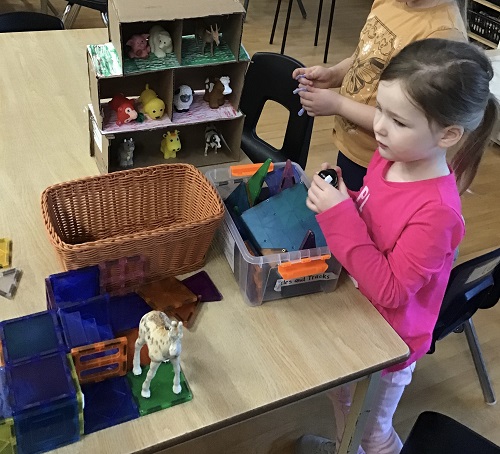
Recently, the children have been asking if we can make stairs for the zoo using cardboard so the animals can move up and down.
One day we also heard Huxley saying, “Bears live in ice and tigers live in the zoo.” This sparked a conversation about where different animals live. To support this interest, the educators brought charts showing different habitats and we talked about animals that live in forests, icy places, and other environments, such as tigers, lions, penguins, and bears. We also introduced a farmyard zoo block set. The children enjoyed placing different animals inside the zoo and organizing them in different areas.
This experience shows the children’s strong interest in animals and imaginative play. They are working together, sharing ideas, and collaborating to build their zoo. Through this activity, the children are developing creativity, problem-solving skills, and teamwork. They are also beginning to explore early science concepts by learning about different animals and their habitats. The discussions and materials helped extend their understanding and encouraged deeper thinking about where animals live.
To support this growing interest, we will continue to provide more materials and loose parts so the children can expand their zoo. We can explore building more features such as stairs, fences, and different animal habitats. We will also introduce books, pictures, and activities about animals and their environments so the children can learn even more while continuing their creative play.