
Our journey began with a simple spark of curiosity on the playground. Our toddlers noticed our furry neighborhood friends, the squirrels, hopping from tree to tree and darting across the fence lines. They stopped, looked up, and began pointing eagerly at the sudden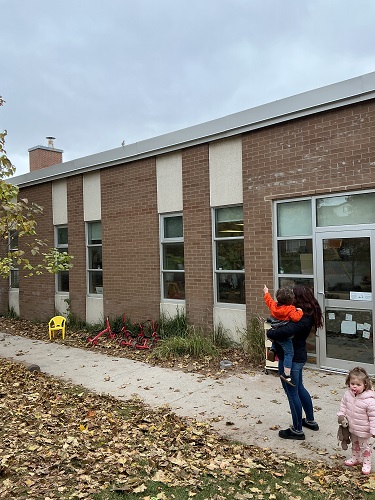 movements, their eyes wide with wonder. They listened intently to the chattering sounds echoing from the branches and sought to locate where the noises were coming from. Recognizing this profound interest, we decided to follow their lead to streng
 then our relationships and co-construct a learning path based entirely on what captured their attention.
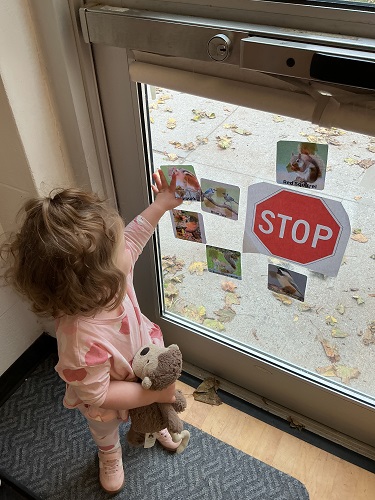
To bring this outdoor magic inside, we introduced realistic toys and printed vibrant photos of local wildlife—such as the robin, black-capped chickadee, blue jay, cardinal, chipmunk, eastern gray squirrel, red squirrel, pigeon, and raven—as well as exotic birds like the flamingo. Placing these pictures right on our classroom door transformed our morning routine. What used to be a difficult drop-off transition became an exciting morning quest. We began welcoming the children with a playful invitation: "Let's go see which birdie or squirrel is waiting on the door today!" Eager to discover the answer, Claire, Domenic, Oliver and Madelyn other friends would shift seamlessly from saying goodbye to their parents to launching into an immediate, curious search.
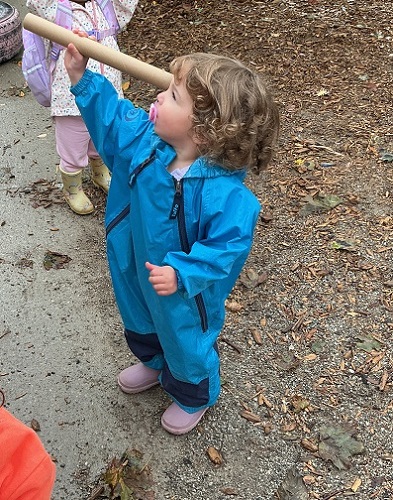
The exploration deepened when we crafted cardboard binoculars together. This simple craft quickly turned into a multi-use tool. Toddlers- Katarina, Maria, Van wore them like proud necklaces, but they didn’t stop at just looking through the holes. With incredible imagination, they flipped the binoculars around, using them as microphones and listening devices to mimic and capture the sounds of the environment.
We then took the investigation into sensory and scientific play:
- The Ice Rescue: We froze the animal figures in large blocks of ice. Lennox immediately empathized with the trapped animals, exclaiming, "It’s cold!" and "It's stuck inside!" He joined his peers and together they problem-solved by using spoons to chip away at the ice or intentionally dropping them on the floor to liberate their frozen friends.
- Playdough Impressions: We observe that children pressed the feet of the toy birds and squirrels into playdough, discovering cause-and-effect as they analyzed the distinct footprint patterns left behind. Nora created her round shaped eggs and made her imaginary pretend play with the squirrels.
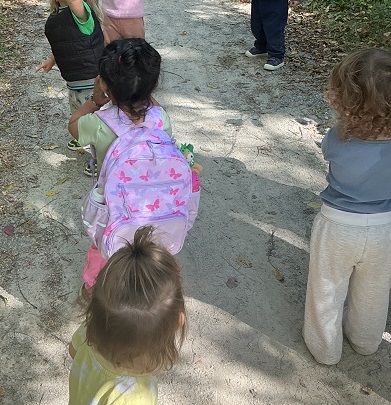
- Soundscapes & Walks: We integrated recordings of bird songs into the classroom. Oliver and Eliana and Aurora joined to tracked these loud, clear sounds across the room, which naturally led us out on a neighborhood trail walk. Toby, Valerie and Harneet excitedly walked around different paths in the trail and together embraced their senses as they listened to buzzing insects, watched birds fly between the treetops, and observed chipmunks enjoying the natural habitat.
- Building a Habitat: To wrap up our journey, we gathered leaves, stones, and pinecones during our walk. Back in the classroom, Nora and Van joined with peers used these natural treasures to build and explore tactile, miniature habitats for their toy animals.
Through this experience children learned and demonstrated-
- Social-Emotional Development & Well-Being: Children built a strong sense of security, belonging, and emotional regulation during morning drop-offs by engaging with the familiar visual cues on the cl
 assroom door. They also demonstrated deep empathy and collaborative care as they expressed concern for the frozen animals and worked diligently to rescue them from the cold ice.
- Cognitive Skills & Creative Problem Solving: Toddlers explored the concepts of cause-and-effect and trial-and-error by discovering how physical force (using spoons or dropping the ice) could break a solid structure to free a toy. They further deepened this scientific inquiry by analyzing how different object textures and weights leave matching footprint impressions in soft playdough.
- Creative Expression & Symbolic Play: Children showed remarkable imagination and cognitive flexibility by transforming their handmade cardboard binoculars into multi-functional tools. Instead of just looking through them, they repurposed the tubes as microphones and auditory devices to mimic sounds, while proudly styling the attached strings as wearable necklaces.
- Language, Auditory & Sensory Exploration: Toddlers sharpened their auditory discrimination and communication skills by identifying, tracking, and mimicking unique bird calls and insect noises across various environments. Additionally, they refined both fine and gross motor skills by using small tools, walking along the neighborhood trail, and manipulating natural elements like pinecones, stones, and leaves.