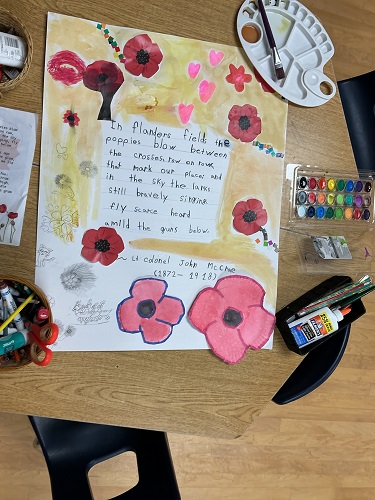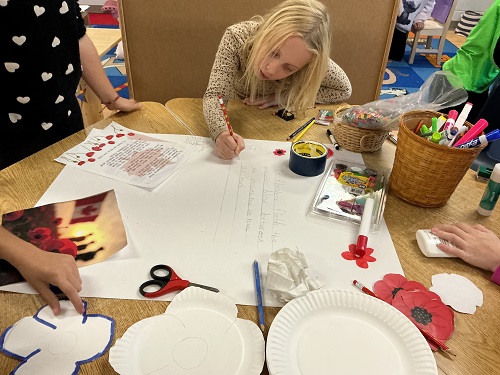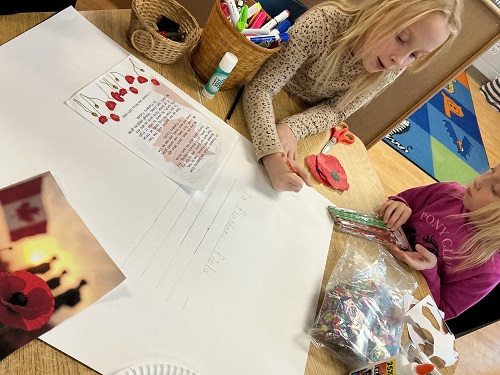
The children participated in a meaningful and collaborative activity to create a Remembrance Day poster. Each child had an opportunity to contribute their own ideas, skills and creativity to the project. Before beginning, we gathered together to talk about Remembrance Day, its significance and why we wear poppies to honour those who sacrificed their lives for our freedom and peace.
Hannah was given the responsibility of creating poppy flowers using paper plates. She carefully cut the paper plates into flower shapes and painted them red using watercolours. While working, we discussed why the poppy is an important symbol of Remembrance Day. We talked about how poppies remind us of the soldiers who fought in wars and how they represent remembrance, hope and peace. The conversation encouraged her to think beyond the art activity and understand the meaning behind the symbols we were creating.
Kaia took on the task of writing the famous In Flanders Fields poem from a written copy. As she carefully copied the poem, we discussed the author, Lieutenant Colonel John McCrae, and the reason he wrote it during the First World War. The children were already familiar with the poem because they had been reciting it during school assemblies. This familiarity encouraged a longer and more engaging discussion. Together, we recited the poem aloud, talked about its meaning and reflected on why it continues to be remembered today. It was wonderful to see the children making connections between what they had learned in school and the activity we were doing together.
Adriana and Iliana enthusiastically helped decorate the poster by drawing beautiful flowers using colourful markers. As they added their drawings, we began discussing other things that can represent peace, such as flowers, hearts, doves and helping one another. The children shared their thoughts and ideas, which led to several interesting conversations about kindness, friendship, respect and what it means to live peacefully. It was lovely to see how a simple art activity encouraged the children to express their understanding of such an important topic.
This experience supported multiple areas of children's development. Physical development, particularly fine motor skills, was encouraged through cutting paper plates, holding paintbrushes, painting, writing and drawing. Language and literacy development were strengthened through learning new vocabulary, copying the poem, reciting it together, listening to others and participating in meaningful conversations. Cognitive development was supported as children explored the history and significance of Remembrance Day, learned about the author of the poem, made connections to their previous learning and developed an understanding of symbols associated with peace. Social and emotional development was encouraged through teamwork, sharing responsibilities, expressing personal thoughts, listening respectfully and developing empathy and appreciation for others. Creative development was fostered as children explored different art materials, colours and techniques to bring their ideas to life.
Overall, this experience was much more than creating a poster. It provided an opportunity for children to learn about history, express their creativity and develop an understanding of remembrance, peace and gratitude. Most importantly, it showed how meaningful conversations and collaborative experiences can help children connect their learning to the world around them.