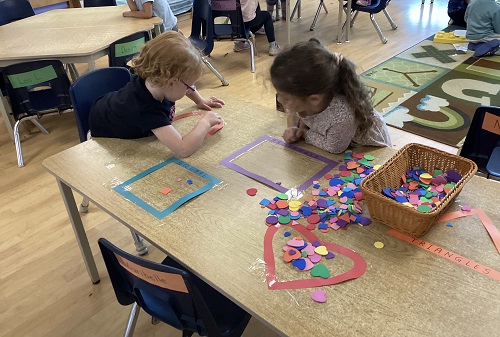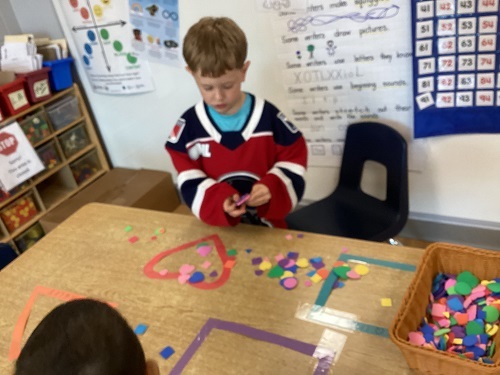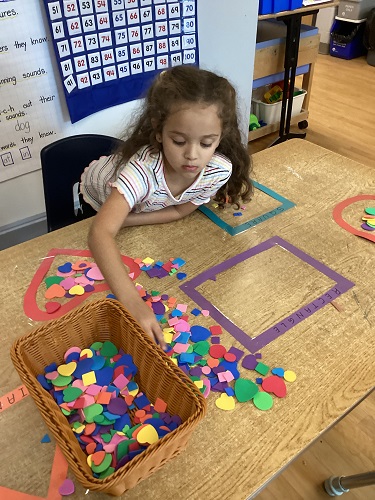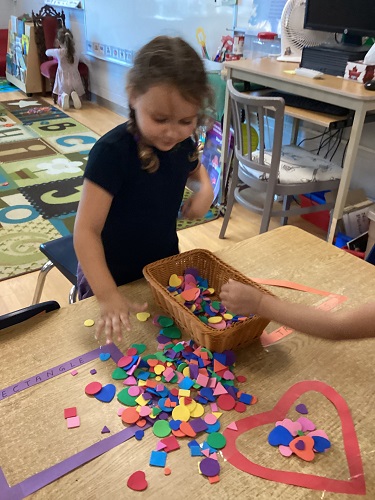
During the shape-matching activity, children were introduced to four basic shapes: circle, rectangle, square, and triangle along with a heart shape. Large shapes were cut out and taped to the table, while a variety of smaller mixed shapes were provided to the children. The children were encouraged to observe each shape, identify its characteristics, and match each small shape to the corresponding large shape by placing it inside. Educators supported the children by naming the shapes and posed open-ended questions if they saw similarities and/or differences.
This hands-on activity supported children's cognitive development, shape recognition, and problem-solving skills. It also promoted fine motor skills and hand-eye coordination as children picked up, positioned, and matched the shapes while enjoying a meaningful, play-based learning experience.