This summer, the preschool children have been deeply engaged in caring for our garden, demonstrating increasing responsibility, teamwork, and curiosity about the natural world. Their gardening journey consisted of different activities, allowing them to explore all the different ways one can garden.
Our first experience with gardening began by making newspaper pots with a pot maker and choosing seeds such as peas, tomatoes, cucumbers, zucchini, peppers, and beans to plant. The children carefully added soil, made spaces for their seeds, covered them gently, and watered them, proudly taking ownership of the plants they were cultivating. As the seedlings sprouted and grew taller each day, the children eagerly observed changes, shared personal connections, and asked thoughtful questions.
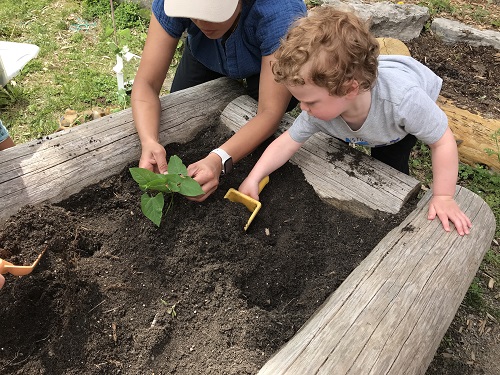
As our indoor garden continued to flourish, the children helped in preparing the outdoor garden beds. Using rakes and shovels, they dug and loosened the soil before transplanting the classroom seedlings into larger pots and outdoor garden spaces. They noticed details such as the size of the roots, the importance of spacing plants apart, and the need to water the soil before planting. The children also discovered that different plants grow in different ways. While observing the bean vines climbing higher and higher up the trellis, Bellamy excitedly wondered if they would “touch the roof,” leading to conversations about creepers and climbers and how some plants need support while others spread along the ground. When the cucumber and zucchini plants became crowded, the children recognized that the seedlings needed more room and worked together to transplant them carefully into larger garden beds.
Through these experiences, they developed an understanding of cause and effect, learned that plants need water, sunlight, soil, and space to grow, and began to appreciate where food comes from and how living things change over time. The children have also engaged in rich sensory exploration and practical skill building. A few weeks after planting mystery seeds in red solo cups, the children watched with great excitement as patches of grass grew taller each day. We then decided to give the grass a haircut, using proper scissor safety.
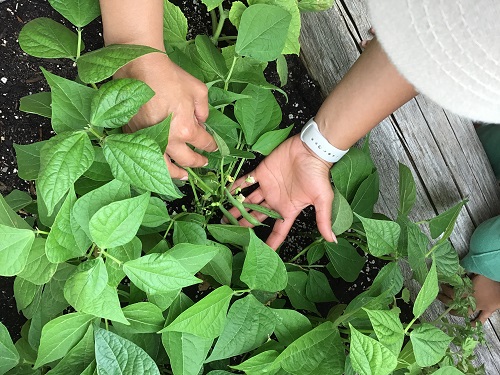
Finally, the children reached an exciting milestone when they were able to harvest green beans from the garden they had patiently cared for since early spring. Gathering around the garden beds, they picked the beans with gentle hands and proudly tasted the fresh vegetables they had grown themselves. Alicia shared, “It’s good,” while Rowan observed, “It kinda tastes like grass.” These moments encouraged curiosity, confidence, and sensory exploration as the children made their own choices about trying new foods. Together, these experiences reflect our emergent curriculum, where the children’s observations, questions, and interests continue to guide opportunities for exploration, meaningful conversations, and deeper connections with the natural environment as we look forward to harvesting even more vegetables from our thriving garden.