Collaboration plays an important role in the development of school-age children between the ages of 6 and 12. It involves children working together, sharing ideas, and solving problems as a group. In schools, collaboration is often encouraged through group activities, discussions, and projects. These experiences help children grow academically, socially, and emotionally.
One of the major benefits of collaboration is its impact on cognitive and academic development. When children work together, they have opportunities to discuss ideas, ask questions, and explain their thinking. This process helps improve problem-solving and critical-thinking skills. Collaborative learning also encourages students to consider different perspectives and discover new ways of approaching a problem.
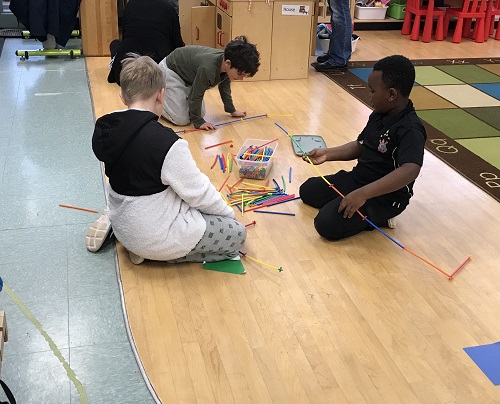
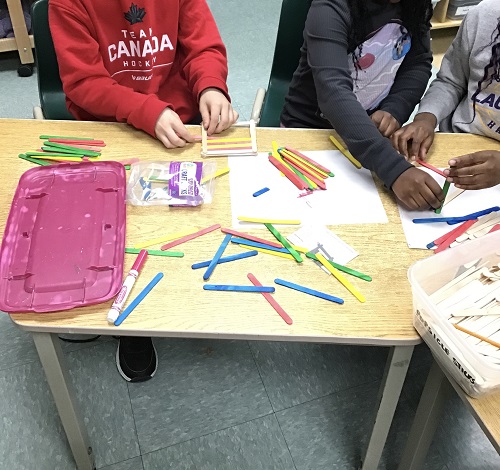
Activities such as group science experiments, paired reading, and team math challenges allow students to actively participate in their learning. For example, Samuel, James B., and Santiago used sticks and connectors to build a house. Through this activity, they applied math and physics concepts such as sorting, counting, and measuring length and weight. They also calculated how much material they needed to add or remove in order to make the structure stable.
Collaboration also supports the development of social skills. Working in groups teaches children how to communicate effectively, listen to others, and respect different opinions. They learn how to share responsibilities and take turns during tasks. For instance, Catherine, Glorianne, and Naomi wanted to explore their gross motor skills by hanging upside down on a log. By working together and problem-solving, they realized that one person needed to hold the child’s legs while another stayed nearby in case assistance was needed. This experience not only strengthened their friendship but also helped build trust among them.
In addition, collaborative activities help children develop conflict-resolution skills when disagreements occur, which is an important part of building healthy relationships. Collaboration also contributes to emotional development. When children interact with their peers, they begin to understand the feelings and perspectives of others, helping to develop empathy and emotional awareness. Participating in group activities can also build self-confidence, as children feel proud when they contribute with ideas and help their team succeed. Furthermore, collaboration creates a sense of belonging, which can reduce feelings of loneliness or isolation.
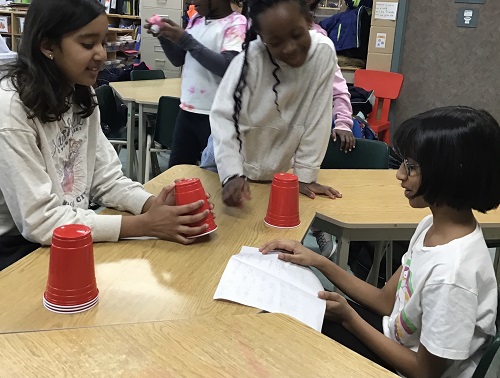
Collaboration also helps children develop leadership and responsibility. In group work, students often take on roles such as leader, note-taker, or presenter. These roles encourage them to take responsibility for their tasks and contribute to the group’s success. At the same time, children learn how to support others and work as a team. For example, one afternoon Geetan decided to teach Glorianne and Megha the cup song. Acting as the leader, Geetan guided and supported their learning throughout the activity. This experience boosted Geetan’s confidence while also encouraging the other girls as they learned together.
Finally, collaboration encourages creativity and innovation. When students share ideas and brainstorm together, they can develop more creative solutions to problems. Exposure to different viewpoints allows children to think more openly and experiment with new ideas.
In conclusion, collaboration is an essential part of children’s development during their school years. It supports academic learning, social skills, emotional growth, leadership, and creativity. By encouraging collaborative activities in classrooms and other learning environments, teachers and parents can help children develop important skills that will benefit them both in school and in their future lives. Observing these moments of teamwork also raises an important question: what other discoveries, skills, and achievements might children reach when they continue learning and growing together?